Feature · Badminton
Badminton Smash: the Garmin app that knows which service court you should be in
Badminton changes its scoring system in January 2027 for the first time since 2006. The newest of the studio's racket-sport apps was built for both systems, and for the rule club players get wrong most: where to stand.
By Multipassionate · 3 October 2026 · 11 min read
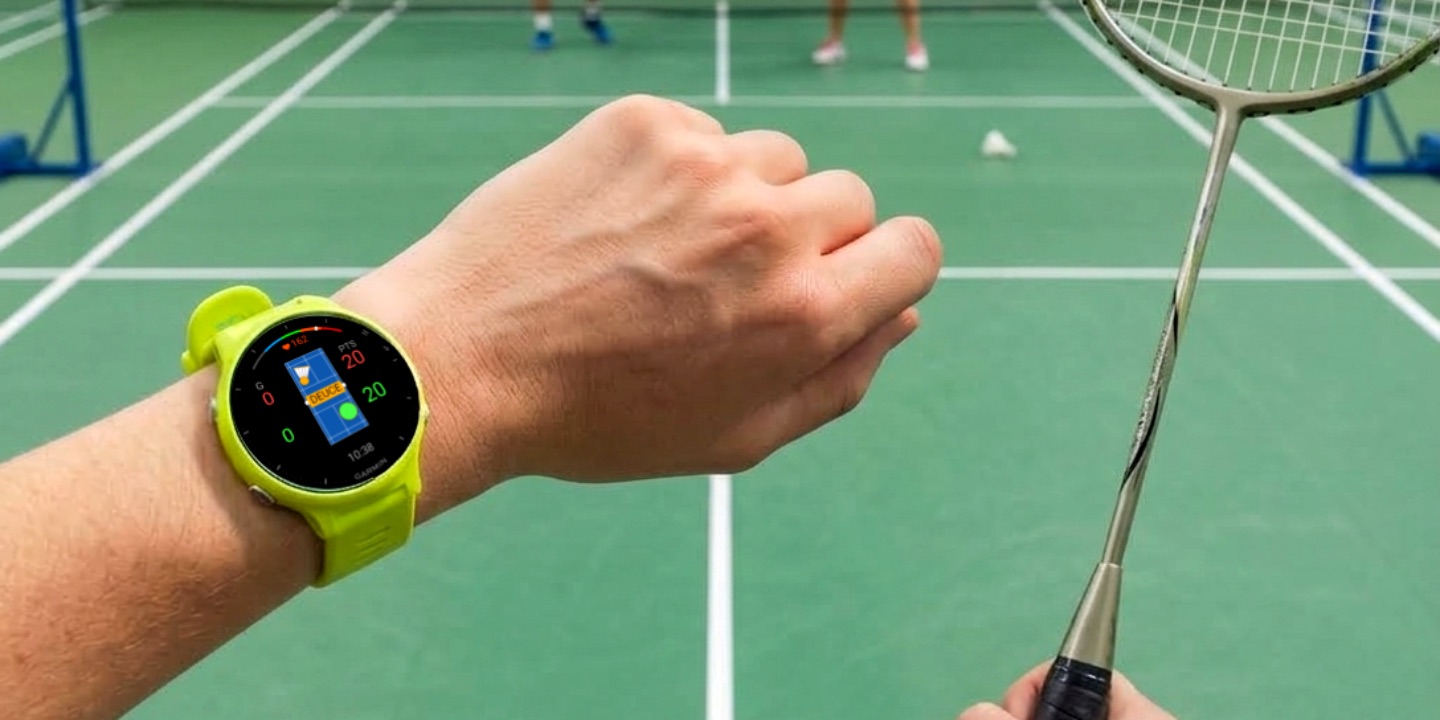
Club doubles, a weeknight, a sports hall that smells of floor polish. The score is 5-4, the serving pair has just won a rally, and the server walks to the same side of the court as before. The receivers object. The server's partner is not sure. Somebody explains the rule, somebody else explains it differently, and the rally is replayed while everyone quietly resolves to look it up later.
The service court is the part of badminton scoring that club players get wrong most often, and it is the problem Badminton Smash was built around. The app, a free Garmin watch app from the Dutch studio Multipassionate, keeps score under the Laws of Badminton set by the Badminton World Federation (BWF), and it shows, on every rally, the exact service court the server must serve from. It arrives at a good moment: from January 2027, badminton changes its scoring system for the first time since 2006.
What Badminton Smash is
Badminton Smash is a free Connect IQ app for Garmin watches. After each rally the player presses Down if their side won it or Up if the other side did, and the watch applies the rules: points, games, deuce, the cap, who serves, from which court, and in doubles, which court the wearer stands in. Every session is saved to Garmin Connect as a workout with heart rate, calories and one lap per game. A free live scoreboard at badmintonsmash.app lets anyone follow the match on a phone and hear the score called aloud.
It is made by Multipassionate, an independent studio in Utrecht, the Netherlands, and it is the newest of the studio's racket-sport apps, launched in September 2026. In October 2026 it was at version 1.2.1, ran on more than 100 Garmin watch models and spoke 14 languages on the watch. It needs no account and costs nothing.
The geometry problem
Badminton's serving rules are short to state and surprisingly hard to follow in real time:
- Service court by score. The server serves from the right service court when their side's score is even and from the left when it is odd.
- Winning on serve. When the serving side wins a rally, the same player serves again, from the other court. In doubles, the serving pair swaps courts.
- Winning on return. When the receiving side wins a rally, it gains a point and the serve, and nobody moves. The new score decides which court serves, and whichever player is already standing in that court becomes the server.
- A new game. At the start of each game, the pairs take up their positions again, and either player of the pair that won the previous game may serve first.
The trap is in the third rule. In doubles, a pair swaps courts only when it wins a rally on its own serve, never when it wins one while receiving. That is why two experienced players can stand in the wrong courts at 5-4 and both be sure they are right.
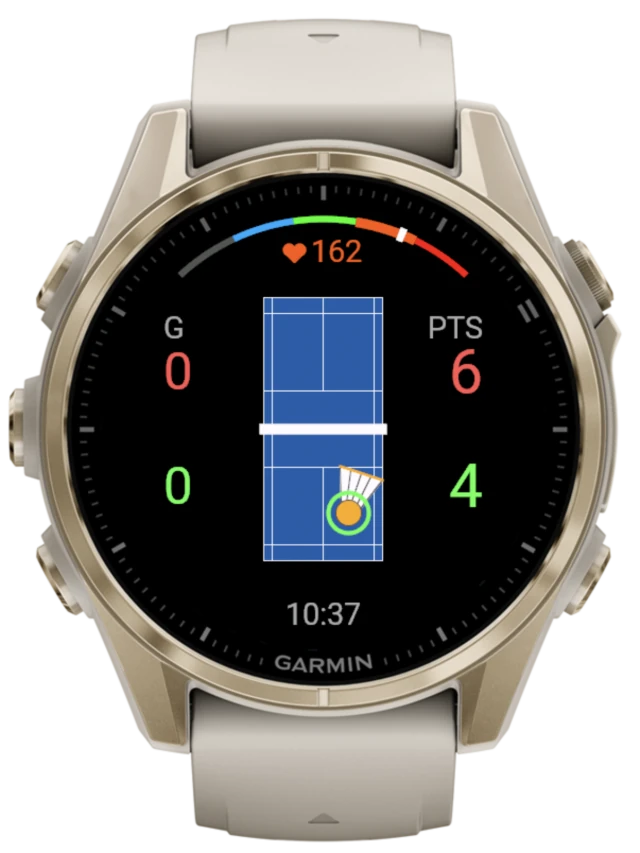
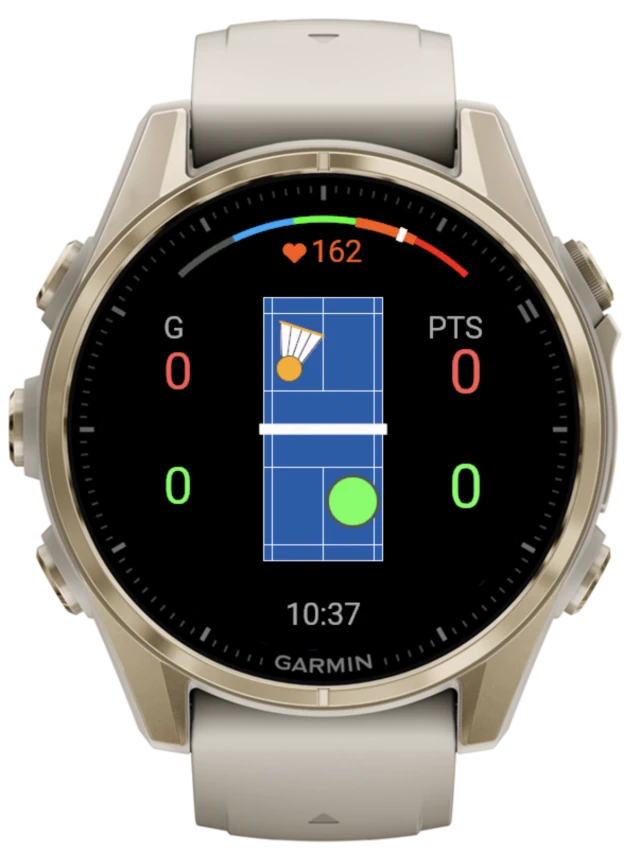
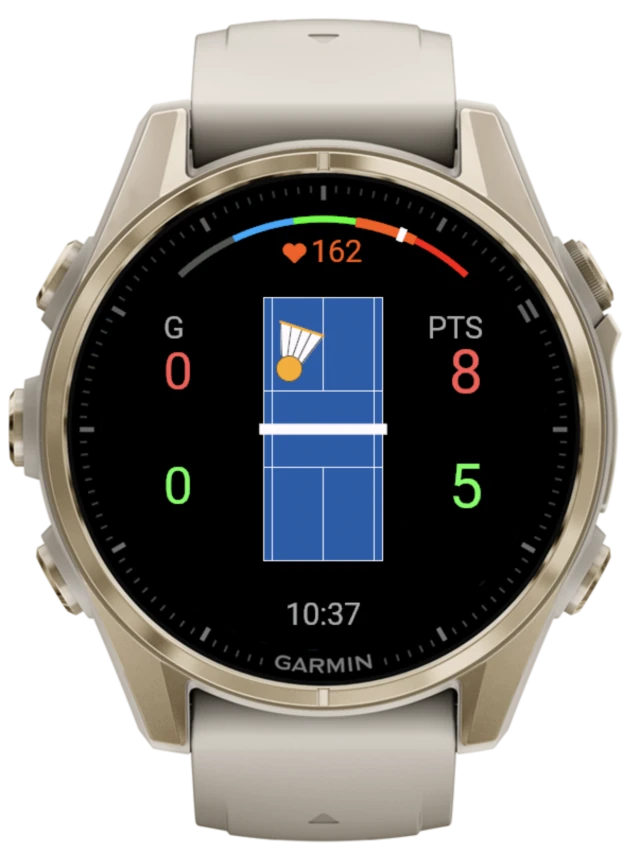
Badminton Smash solves it visually. Its match screen is a true-ratio drawing of a badminton court, with the short service lines, the centre line, the singles sidelines and the doubles long service lines. The shuttle sits in the exact court the server must serve from. In doubles, a marker shows the court the wearer should be standing in, and when the wearer is the server, it becomes a ring around the shuttle. Games are on the left, points on the right, and the whole court is drawn from the wearer's point of view. The badminton site has a full, rally-by-rally walkthrough in its guide to service court rules and doubles rotation.
3x15: a new scoring system, already on the watch
For two decades, a badminton match has meant the best of three games to 21 points, with rally scoring. That is about to change. On 25 April 2026, the 87th BWF Annual General Meeting approved a new system, known as 3x15, by the required two-thirds majority. It comes into force on 4 January 2027:
| 3x21, the outgoing system | 3x15, the new system | |
|---|---|---|
| Game won at | 21 points | 15 points |
| Deuce begins at | 20-20 | 14-14 |
| Cap: sudden death at | 29-29 | 20-20 |
| Longest possible game | 30-29 | 21-20 |
| One-minute interval at | 11 points | 8 points |
Rally scoring, the service courts, the two-minute break between games and everything else stay the same. And 3x21 does not vanish overnight: it remains an approved alternative, so national associations, leagues and clubs may keep it for their own competitions for a while.
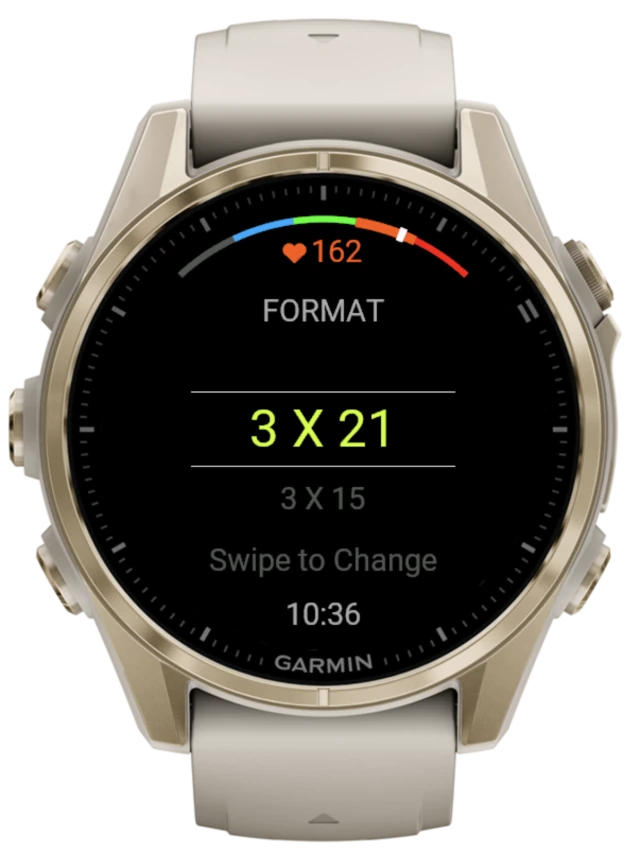
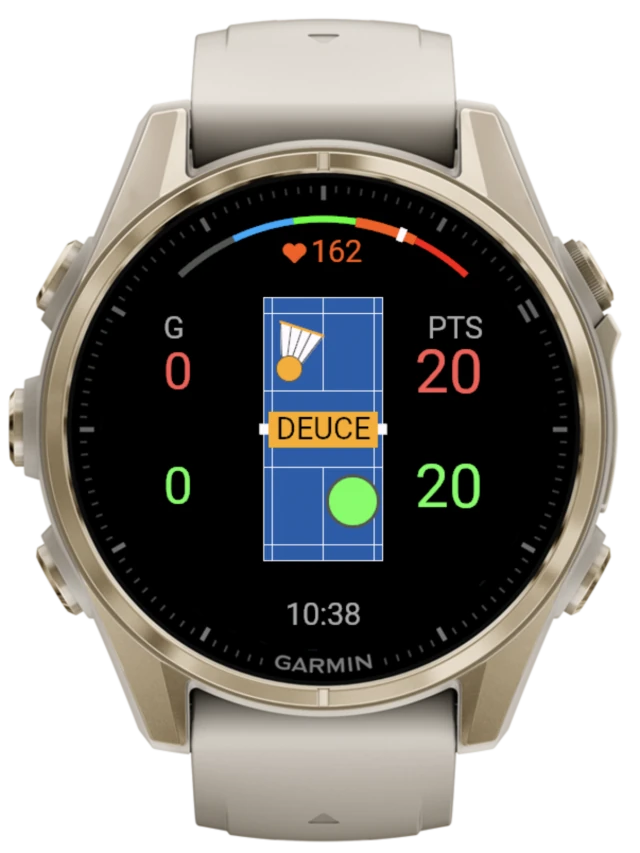
That leaves club players in an awkward in-between period, playing 3x15 in one competition and 3x21 in another. Badminton Smash has both built in, chosen on the first screen of every match, along with 5x11, best of five games to 11, offered for club and social play, and a Custom format with its own target, cap and number of games. Whatever the format, the cap works the same way: at the cap the next point wins outright, so 30-29, 21-20 and, in 5x11, 15-14 all take the game. The details of the new system, including who plays it already and who argued against it, are in Badminton Smash's 3x15 guide.
Match flow on the wrist
Badminton has a rhythm of pauses, and the app keeps time for them:
- Intervals. A 60-second interval when the leading score first reaches 11 in 3x21, 8 in 3x15 or 6 in 5x11, with a countdown on screen and a vibration.
- Breaks. A 120-second break between games, counted down the same way.
- Change of ends. After every game, and once in the deciding game at the interval point, signalled by a vibration. The screen does not flip, so the wearer's score never jumps to the other row in the middle of a match.
- End of match. Detected automatically at best of three or best of five.
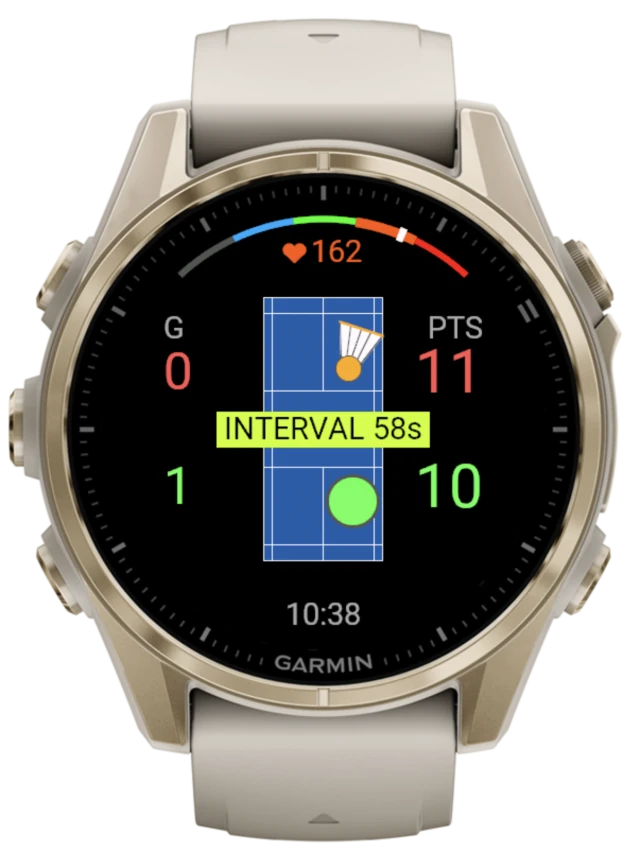
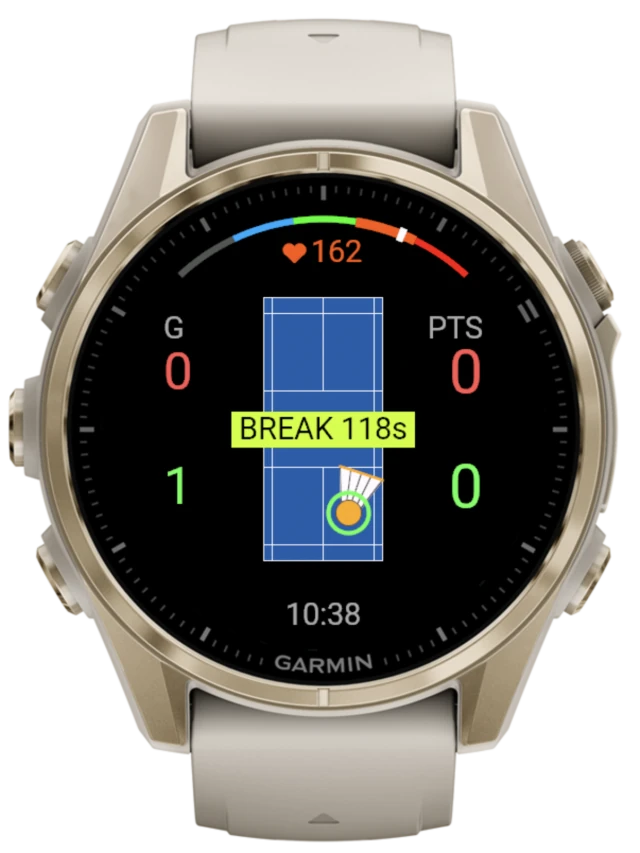
Undo reaches back 15 points, even across the end of a game. If the app is closed by accident, it resumes exactly where it stopped. And when a match is over, the player can save it or start another match on the same Garmin activity, so a club night of five matches becomes one workout instead of five.
The scoreboard that speaks like an umpire
The live scoreboard is off by default. Switching on Live Broadcast in the watch settings, or pressing Launch on Phone to switch it on and open the page in one step, gives a six-digit PIN that anyone can enter at badmintonsmash.app.
What makes it different from a generic score display is the voice. The page calls the score the way a badminton umpire does: "love all" at 0-0, the server's score first, "service over" when the serve changes sides, "game point" and "match point" when a rally can decide things, then "game" and "match". It speaks Danish, Dutch, English, French, German, Italian, Portuguese, Spanish or Swedish, with a male or female voice. The calls play as media, so a phone paired with a Bluetooth speaker can announce a whole club night to the hall.
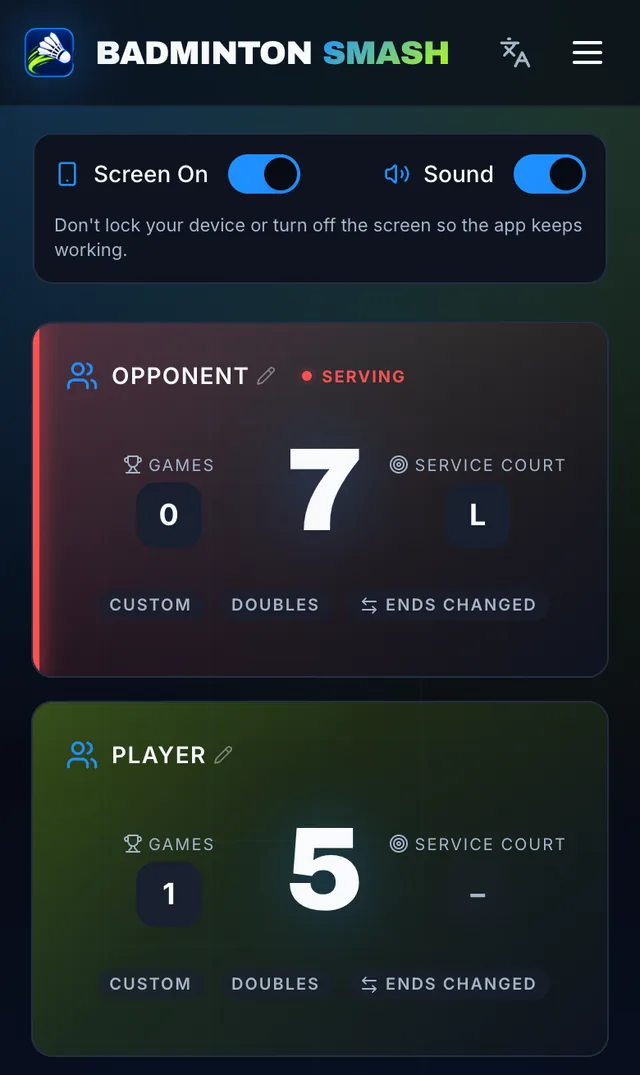
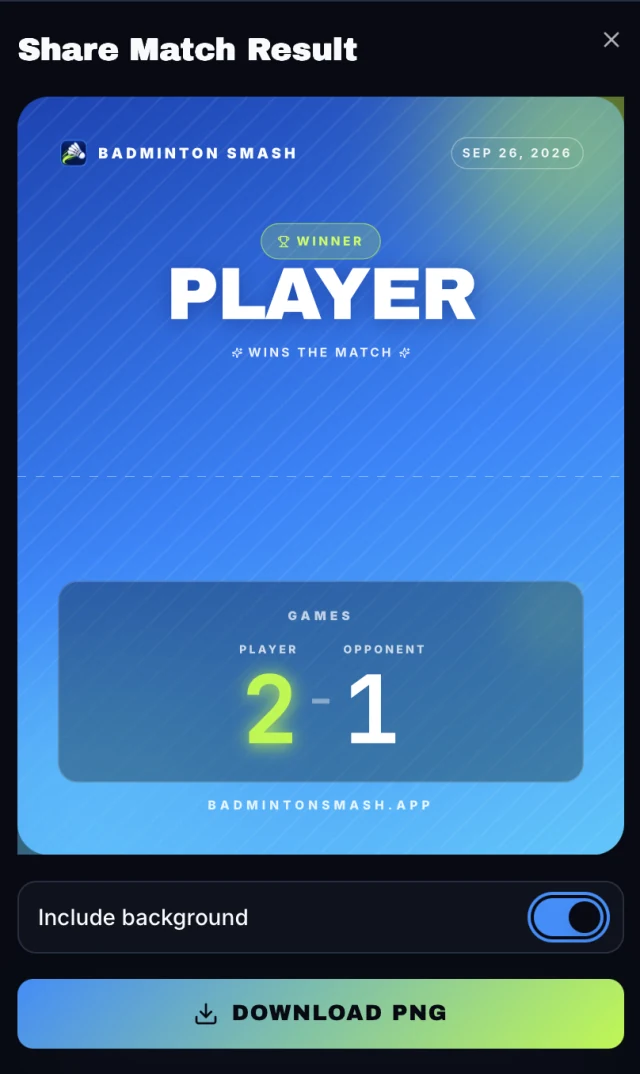
Only the score leaves the watch. According to the app's own description, no name, location or heart rate is sent, and there is no account.
What Garmin Connect receives
Watches with a Badminton activity record the session as badminton. Older models, including some fairly recent ones such as the Forerunner 165 and 945 and the Venu 2, have no badminton activity of their own, and on those, Badminton Smash is the straightforward way to record a session with the right data. They save it as a racket or generic activity with the same fields.
Those fields include the match winner, every game score (for example 21-19, 17-21, 21-15), the games won by each side, and the share of rallies each side won while serving and while receiving. Each game is a lap with points won serving and receiving for both sides. Heart rate, from the wrist or a paired chest strap, and calories are recorded as for any Garmin workout. There is no GPS, which a badminton court does not need.
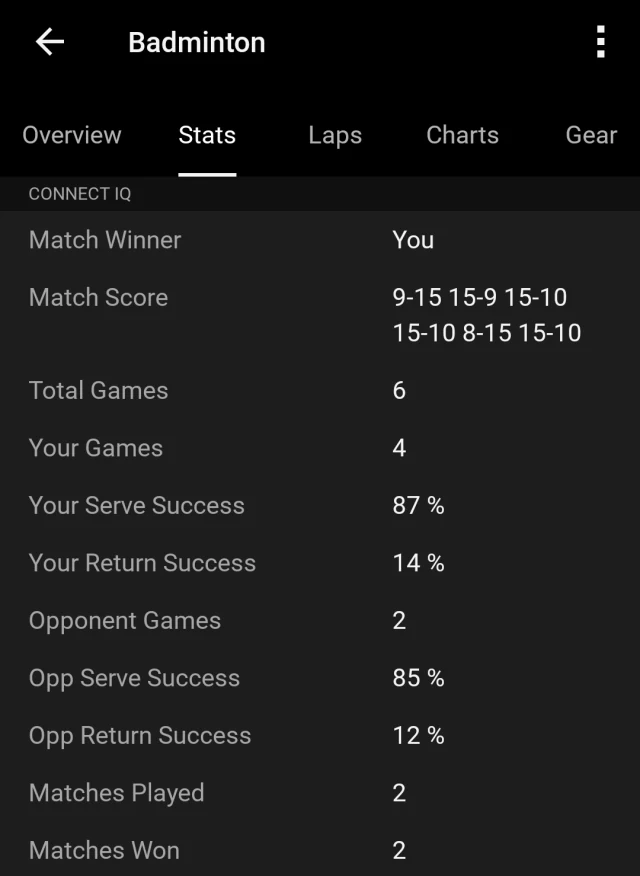
Serve and return figures are less common in badminton analysis than in tennis, but rally scoring makes them meaningful. Every rally scores for somebody, so the side that wins more rallies on its own serve keeps the serve and builds runs of points. A side whose return success drops sharply in the third game may be tiring rather than unlucky. Badminton Smash's guide on heart rate and calories in badminton covers how far to trust the wrist numbers.
Not included, on purpose
The app's help centre lists the things it leaves out and, unusually, why:
- No shot, stroke or smash-speed detection. A wrist sensor cannot reliably tell a clear from a smash in a real match, and a wrong number is worse than none. The site's guide Can a watch detect badminton shots? explains the research.
- No automatic scoring. Only the players know who won the rally.
- No faults, lets or shuttle counts. A let is replayed without pressing anything.
- No player names on the watch. Names can be typed on the live scoreboard instead.
- Garmin only. There is no Apple Watch, Fitbit, Wear OS or phone app.
What to look for in a badminton scoring app
Badminton looks like an easy sport to score, which is why so many apps get the hard parts wrong. These are the questions worth asking of any of them.
| Question to ask | Why it matters | Badminton Smash |
|---|---|---|
| Does it show the correct service court? | It is the most common scoring mistake at club level | The shuttle sits in the exact court, every rally |
| Does it get doubles rotation right? | Pairs swap courts only after winning on their own serve | Yes, with a marker for the court you stand in |
| Is it ready for 3x15? | The BWF system changes on 4 January 2027 | 3x15 built in, next to 3x21, 5x11 and Custom |
| Does it handle the cap? | At 29-all (or 20-all in 3x15) the next point wins | Yes, in every format |
| Does it time intervals and breaks? | Club players rarely track them | 60-second interval and 120-second break, with countdowns |
| Does it work without a badminton activity? | Several watches have no badminton activity | Yes, on more than 100 models, with the same fields |
| What does it cost and share? | Live features can involve personal data | Free, no account, only the score leaves the watch |
Four ways players use it
The club night organiser. Sixteen players, four courts, a two-hour booking. One phone on a Bluetooth speaker announces the match on the main court in umpire style, and each player with the app ends the evening with one workout in Garmin Connect rather than five.
The league doubles pair. Their league moves to 3x15 in January while their club night stays on 3x21 for now. The format is one choice on the first screen, and the service court marker keeps both partners in the right place in either system.
The junior coach. Teaching children the service court rule is easier with a picture than a speech. The watch shows the court each rally, and the live scoreboard can call the score for a group watching from the side.
The owner of a Forerunner 165. The watch has no badminton activity of its own. Badminton Smash records the session properly anyway, with heart rate, calories and a lap per game.
Badminton Smash is less useful for players who want shot counts or smash speeds, which no wrist sensor measures reliably in a real match. It is free, like Tennis Smash and Ping Pong Smash, so trying it costs nothing more than a few minutes in the Connect IQ Store.
The Smash family
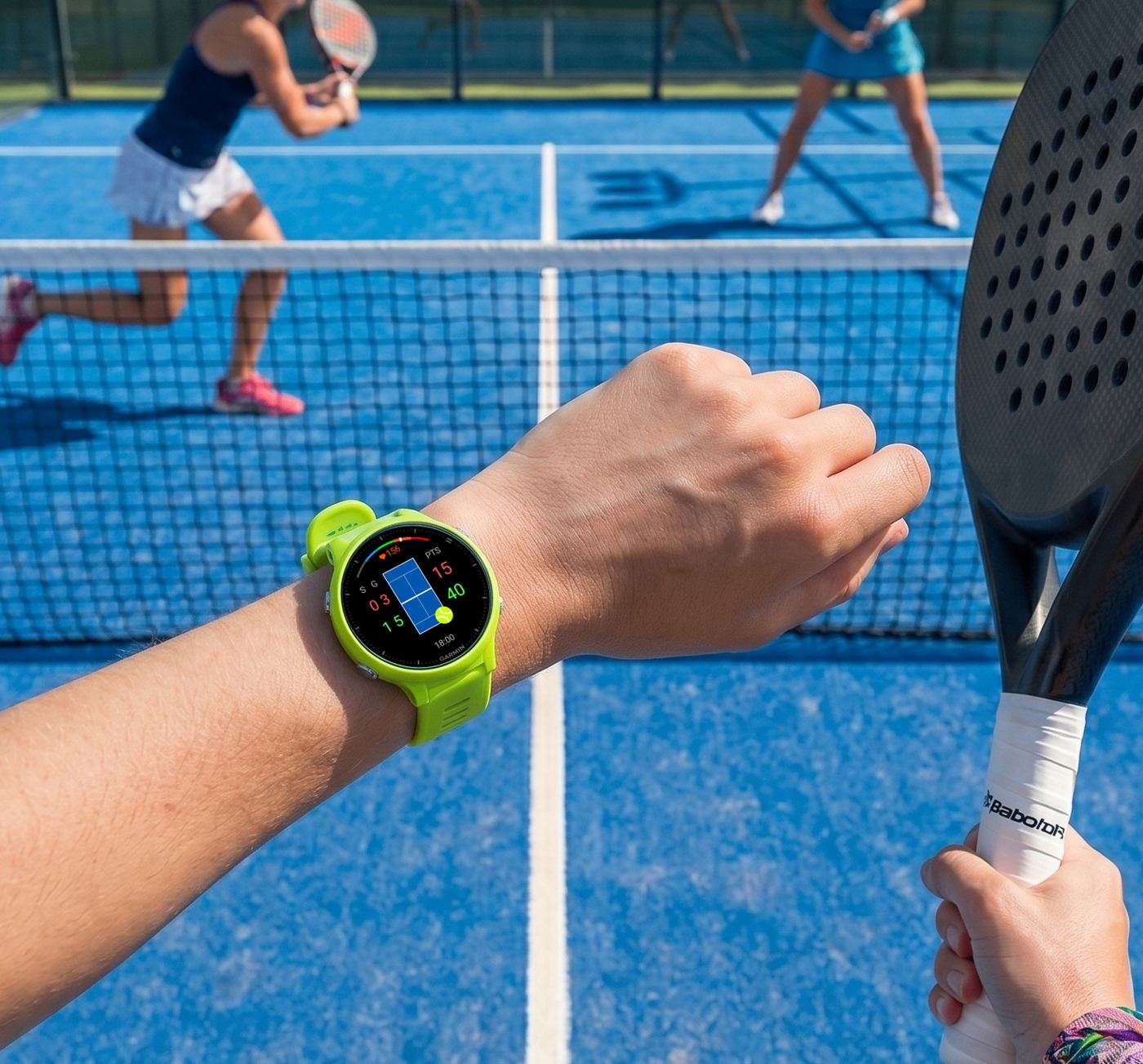
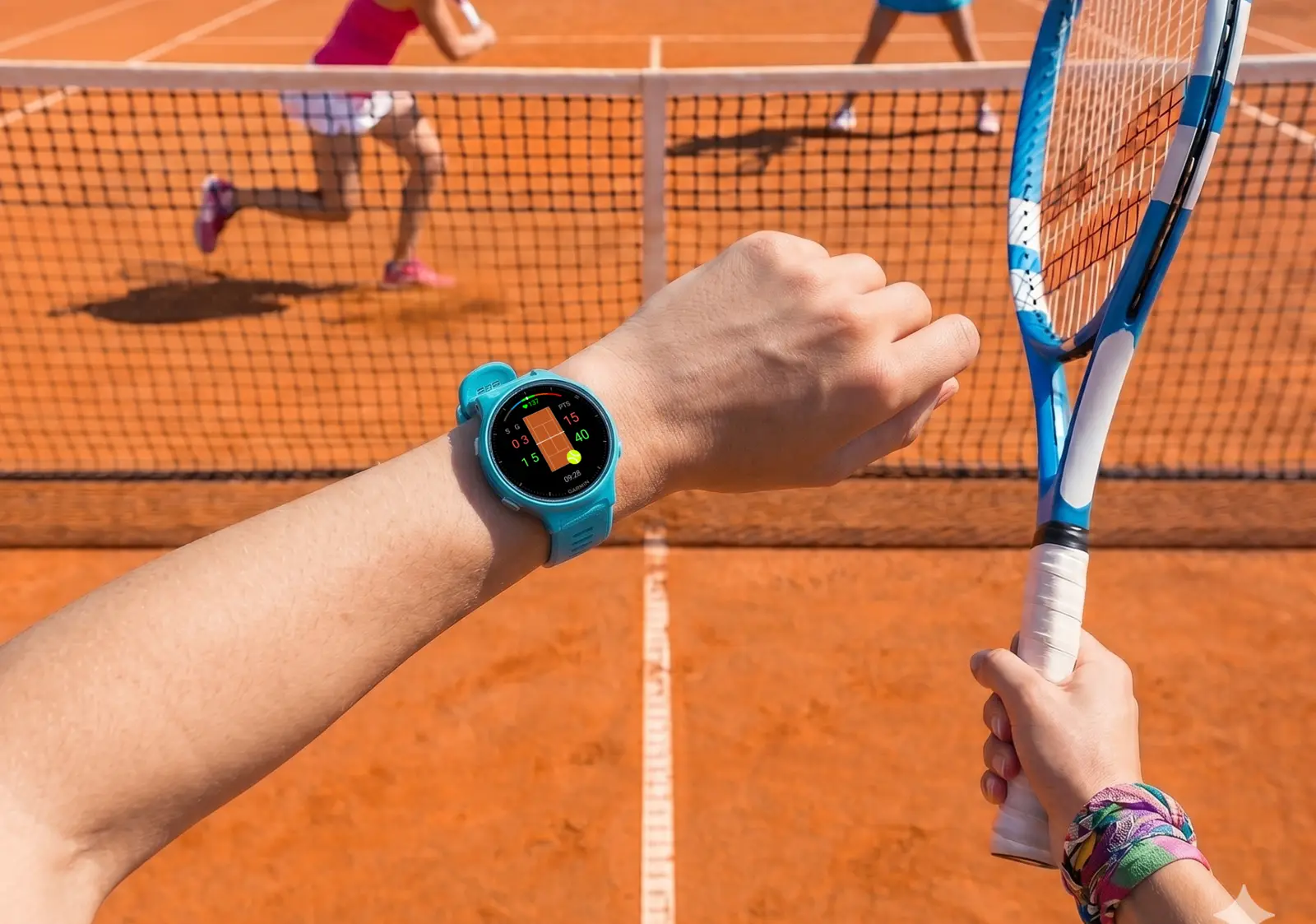
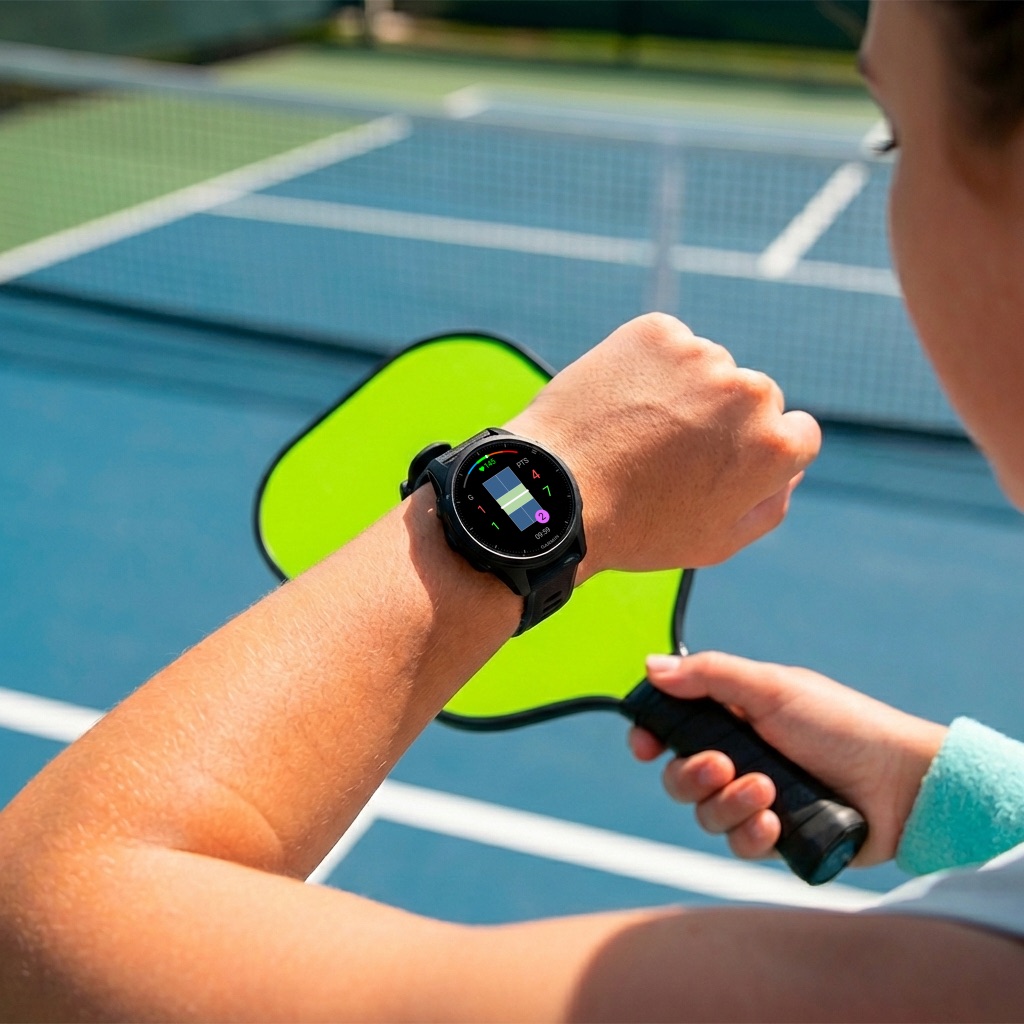
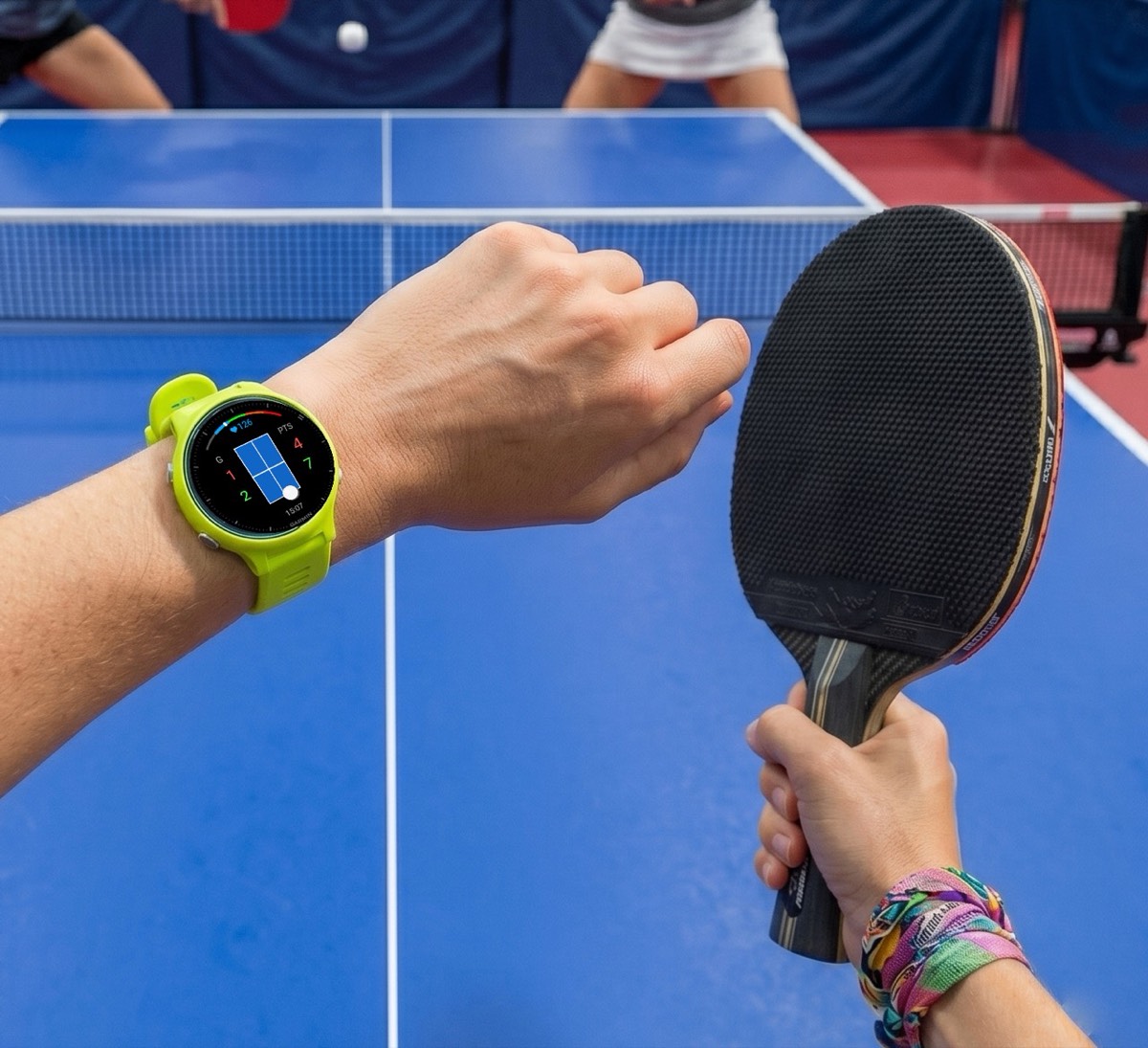
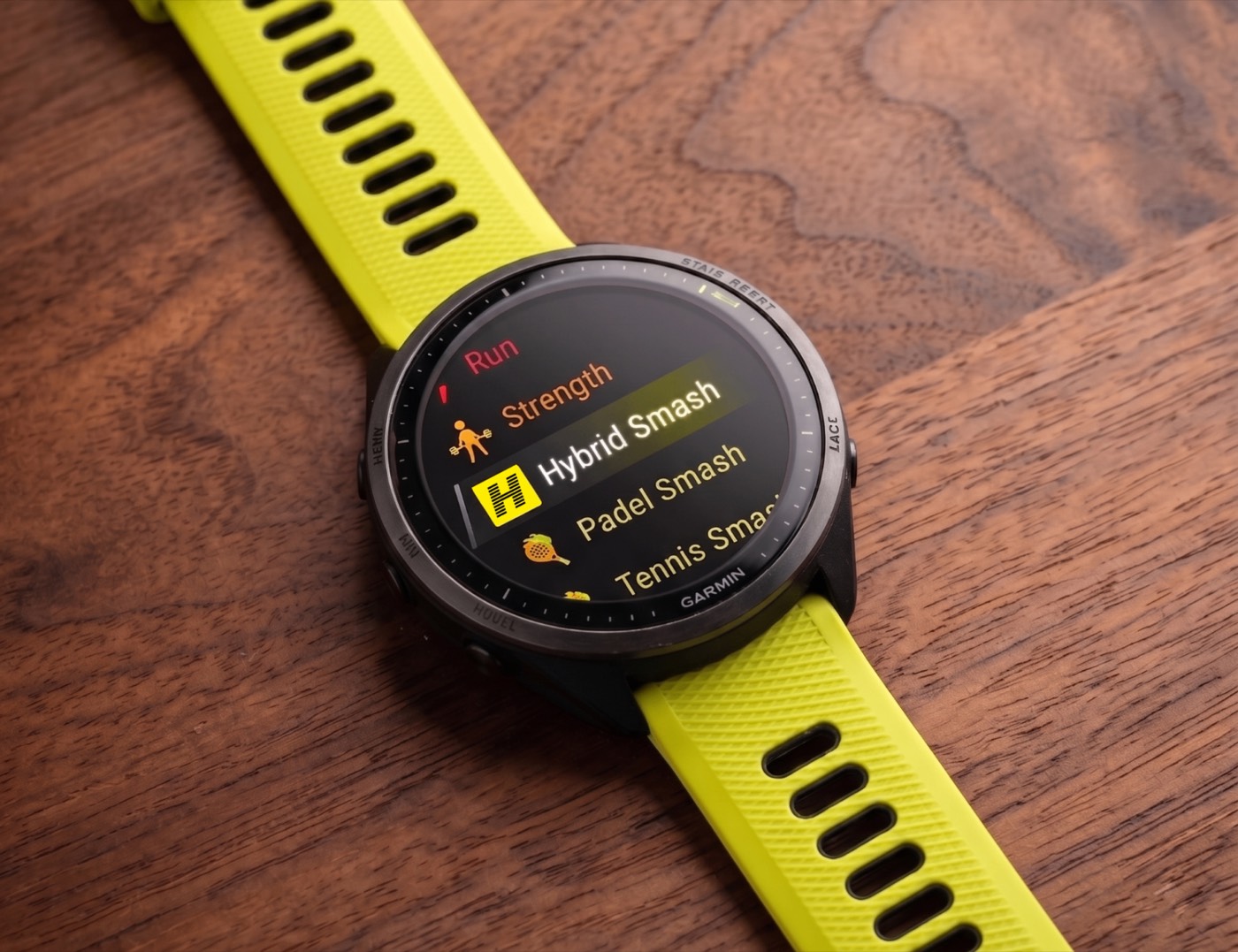
Badminton Smash joins four other court apps from Multipassionate: Padel Smash, Tennis Smash, Pickleball Smash and Ping Pong Smash, which share its controls and its live scoreboard design. Players who combine badminton with race training will find Smash Coach relevant, and its long read on HYROX and badminton is about the sharpest overlap of the lot: one race station of lunges against hundreds of lunges on court.
Badminton Smash is available from its Connect IQ Store listing, with help, guides and the live scoreboard at badmintonsmash.app.
Frequently asked questions
Is there a badminton score app for Garmin watches?
Yes. Badminton Smash is a free Garmin Connect IQ app made by Multipassionate that keeps badminton score under the BWF Laws, shows the correct service court on every rally and saves each session to Garmin Connect.
Does Badminton Smash support the new 3x15 scoring?
Yes. 3x15, which the BWF introduces on 4 January 2027, is built in next to 3x21, 5x11 and a Custom format. In 3x15 the watch applies deuce at 14-all, the cap at 20-all and the interval at 8 points.
How does Badminton Smash show where to serve from?
A true-ratio court on the watch places the shuttle in the exact service court the server must serve from: the right court when the serving side's score is even and the left when it is odd. In doubles, a marker shows the court the wearer stands in.
Does Badminton Smash handle doubles rotation?
Yes. A doubles pair swaps service courts only when it wins a rally on its own serve, never when it wins one while receiving, and the watch follows that rule automatically.
Does Badminton Smash time intervals and breaks?
Yes. It counts down the 60-second interval (at 11 points in 3x21, 8 in 3x15 and 6 in 5x11) and the 120-second break between games, with a vibration for each and for the change of ends.
Can Badminton Smash detect smashes or count shots?
No. Scoring is one press per rally for the side that won it. The app does not detect shots, strokes or smash speed.
Is Badminton Smash free?
Yes. It is free in the Garmin Connect IQ Store, with no account or sign-up. The live scoreboard at badmintonsmash.app is free too.
Who makes Badminton Smash?
Multipassionate, an independent studio in Utrecht, the Netherlands, which also makes Padel Smash, Tennis Smash, Pickleball Smash, Ping Pong Smash, Hybrid Smash, Smash Coach and the Moon Analogue watch face.
Official links
- Badminton Smash in the Garmin Connect IQ Store
- Official website: badmintonsmash.app
- Help centre
- Guides to badminton on a Garmin
- Support: multipassionate@outlook.com
Written and published by Multipassionate, the studio that makes Badminton Smash. Prices, versions and ratings were checked against the Garmin Connect IQ Store on 3 October 2026 and may have changed since.