Feature · Padel
Padel Smash: the Garmin app that settles the 40-40 argument
Padel cannot agree on what happens at 40-40. A Garmin app from a small Dutch studio does not need it to: it plays every version, one button press per point.
By Multipassionate · 3 October 2026 · 13 min read
It is the third deuce of the game, it is twenty past nine on a weeknight, and four people on a glass-walled court are trying to remember what they agreed in the car park. One of them thinks the group plays golden point. Another is sure it was advantages, "like last week". The third has read that the professionals now play something called Star Point and would quite like to try it. The fourth just wants to know who serves.
Padel has not settled what happens at 40-40. Between the classic advantage game, the sudden-death golden point, the in-between Silver Point and the Star Point that the International Padel Federation (FIP) introduced for professional events in 2026, the question now has at least four correct answers. Padel Smash, a Garmin watch app made by the Dutch studio Multipassionate, is built on a simple idea: the watch should know all of them, so the players do not have to.
What Padel Smash is
Padel Smash is a paid app for Garmin watches, sold through Garmin's Connect IQ Store for €9.99 as a one-time purchase. It turns the watch into a padel scoreboard. One press, tap or swipe records each point, and the app works out games, sets, tie-breaks, the deciding-point rule and who serves next. When the match ends, it saves a Garmin activity with the score attached. If anyone wants to follow along, the watch can also broadcast the match to a free web scoreboard at padelsmash.app, where a phone reads every point aloud.
It is made by Multipassionate, an independent studio in Utrecht, the Netherlands, that builds a small family of Garmin apps for racket sports and hybrid racing. In October 2026 Padel Smash was at version 16.10, ran on more than 100 Garmin watch models and held a 4.8 out of 5 rating from 19 reviews on the Connect IQ Store.
What it does not do matters just as much. Padel Smash does not detect shots, does not guess who won a point and does not ask for an account. A person decides every point. The app's job is to make that decision cost one second and zero arguments.
A sport that keeps rewriting its deciding point
Tennis players grow up with deuce and advantage. Padel inherited the same 15, 30, 40 counting, but its players have spent years experimenting with how to finish a game that reaches 40-40:
- Advantage, or unlimited deuces. A pair has to win two points in a row from deuce. Games can go on for a long time.
- Golden Point. At 40-40 a single deciding point wins the game, and the receiving pair chooses which side receives it.
- Silver Point. A club variant with no official definition. It is usually played as one round of advantage, followed by a deciding point if the game returns to deuce.
- Star Point. Two rounds of advantage are allowed. If the game reaches deuce a third time, one deciding point settles it. The FIP approved Star Point at the end of 2025 and brought it into its professional events in 2026.
Padel Smash supports all four, and it lets a group switch from one to another in the middle of a match. That detail sounds minor until you have played in a group where the rule changed after the first set because someone had a train to catch. The app's store listing puts it plainly: switch mid-match "if the group changes its mind".
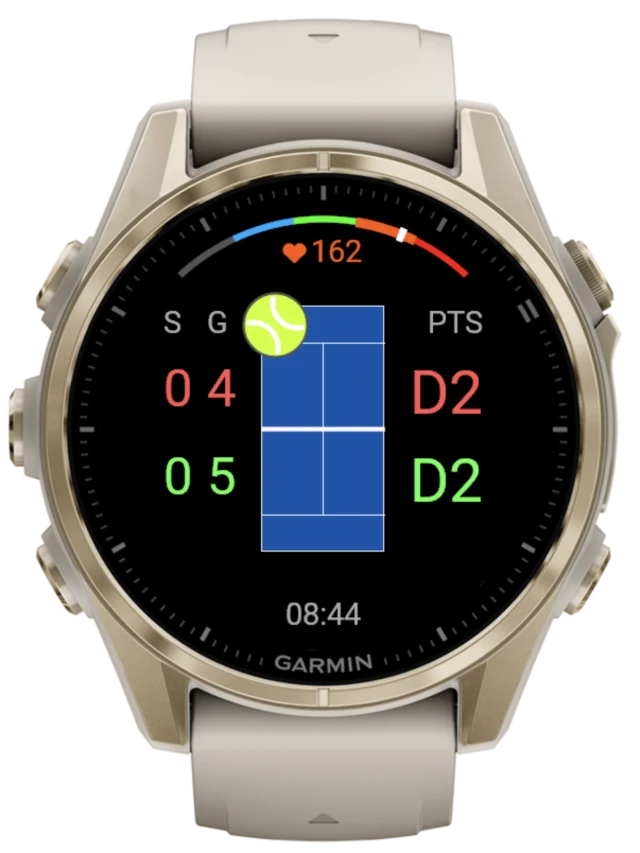
The watch also does the counting that makes the newer rules awkward to play by memory. Under Star Point it labels the deuces D1 and D2 before the deciding point arrives, so nobody has to count advantages while also remembering which corner the next serve goes to. The finer points of each rule, including where each one is played, are covered in Padel Smash's own guide to Star Point, Silver Point and Golden Point.
Set length is configurable too. A standard set runs to six games with a tie-break at 6-6, and a Pro Set runs to nine games with a tie-break at 8-8, a single long set that is not an official FIP format. A New Set option closes the current set early for the evenings when the booking ends before the set does.
One press per point
The controls are the part of Padel Smash that players stop noticing after a few games, which is the idea.
| Action | Buttons | Touchscreen |
|---|---|---|
| Point for you | Down | Tap the lower half, or swipe up |
| Point for the opponents | Up | Tap the upper half, or swipe down |
| Undo the last point | Back | Swipe right |
| Open the menu | Start | Swipe left |
Undo reaches back 15 points, statistics included, so a mis-press in the middle of a long rally does not corrupt the record. A touch toggle switches off taps and swipes on the match screen for anyone who would rather not risk an accidental input, while the menus keep responding to touch.
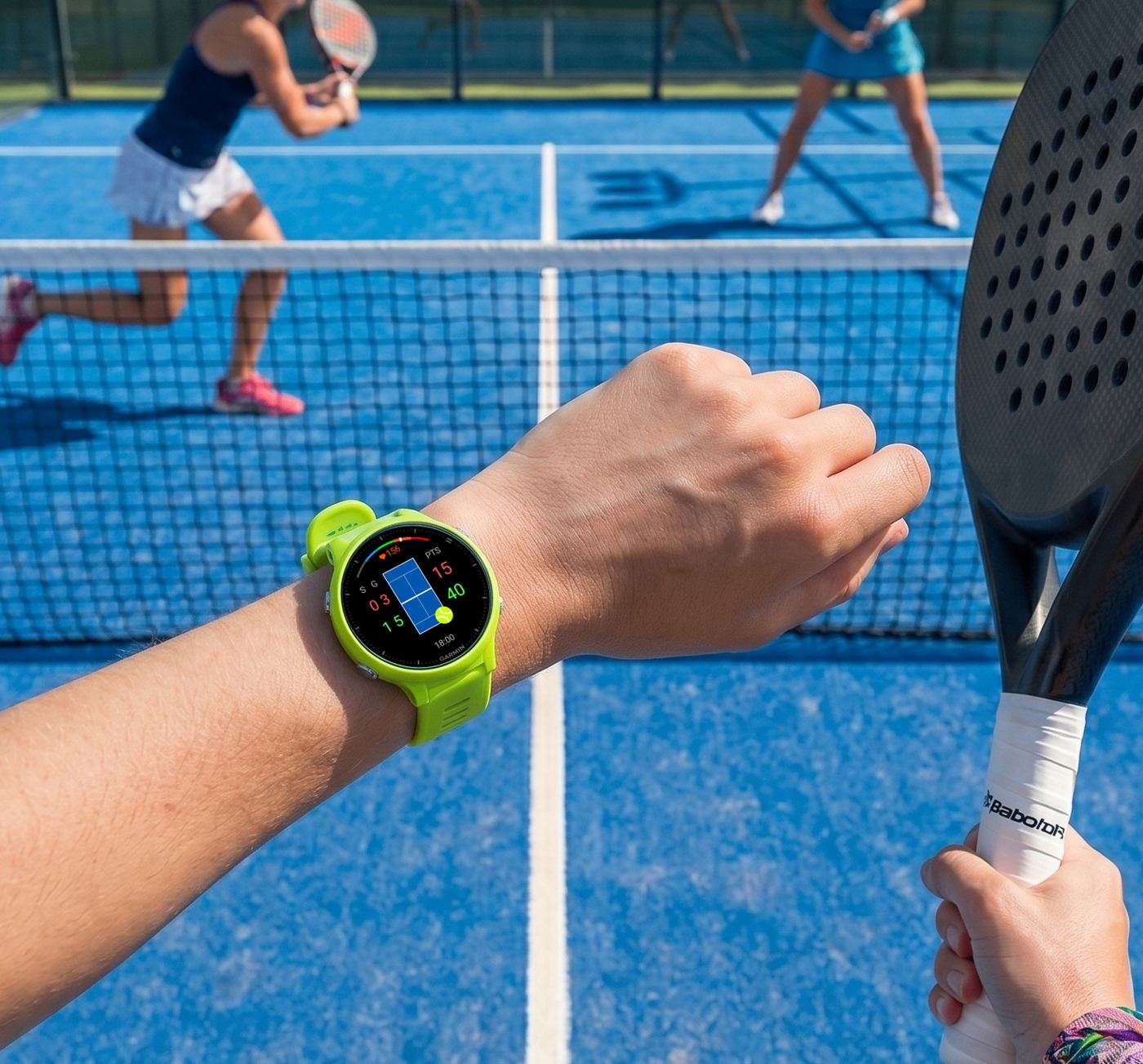
The most padel-specific part of the screen is the serve guide. Padel is almost always played as doubles, which means four servers rotating through a match and a serve that must cross diagonally from the correct side. Padel Smash draws a small padel court and marks who serves and from which side: green for the first server of the pair, yellow for the second. If the order goes wrong, holding the Up button switches the serving team without restarting the match.
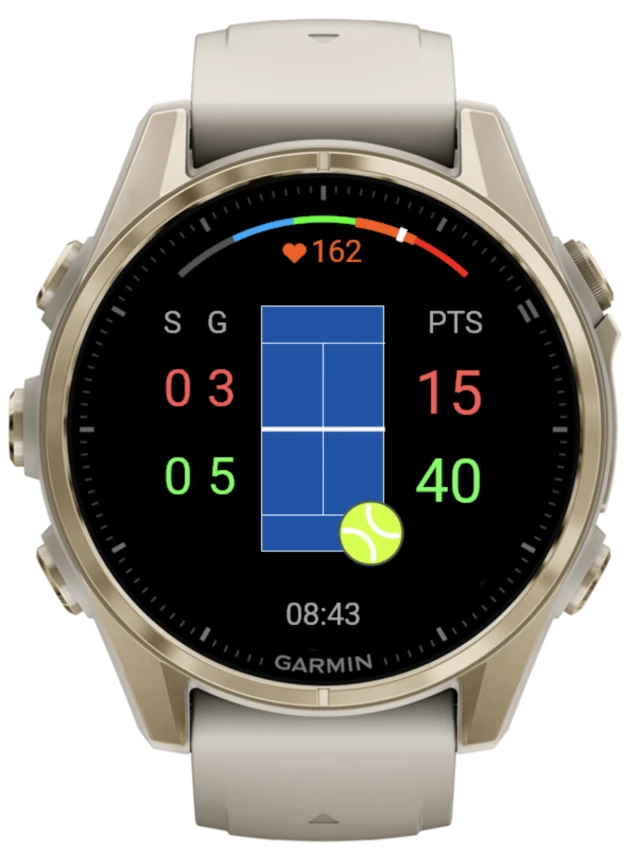
Around the edge of the display runs a heart-rate gauge coloured by training zone, and the court itself can be recoloured. These are not decorations. On a watch that gets half a second of attention between points, one familiar colour and one gauge are faster to read than a page of numbers.
Mexicano and Americano: the other half of padel
A large share of social padel is not played as matches at all. Americano and Mexicano are the formats clubs use for evenings with eight, twelve or sixteen players. Partners rotate, each round is played to a fixed number of points rather than games, and every player keeps a personal running total. In an Americano the pairings follow a fixed schedule. In a Mexicano they are set by the standings as the evening goes on, so players in similar form end up facing each other.
These formats need a different kind of scoreboard, with no games or sets, just points, a limit and a total, and often a debate about whether a round ends when one side reaches the limit or when the two scores combined do. Padel Smash has a separate mode for them, with:
- point limits of 16, 21, 24, 32 or 40,
- a choice between first to the limit and combined points,
- server rotation every 2, 4 or 6 points,
- rounds that can be won, drawn or lost, and closed early when the organiser calls time, and
- a Total Points figure for the whole session.
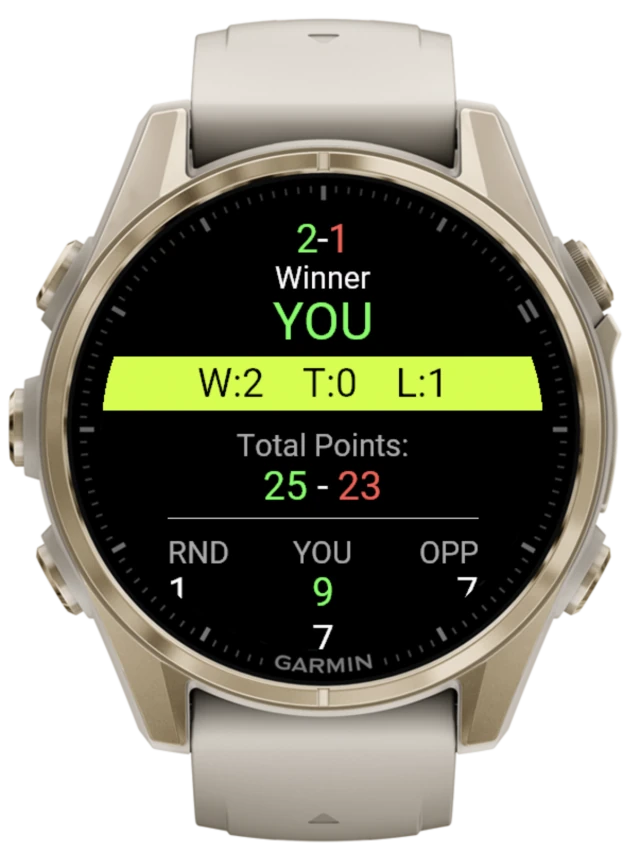
That last number is the practical one. At the end of a Mexicano, each player with the app can read their own session total off the wrist instead of reconstructing it from memory, which saves the organiser some arithmetic when the standings are drawn up. The pairings and the leaderboard itself stay with the organiser. The rules of both formats, and the places where organisers disagree, are laid out in Padel Smash's guide to Mexicano and Americano.
The courtside announcer
The feature that surprises people most is the one the watch cannot do by itself: speak. Padel Smash sends the score to a web page, and the page does the talking.
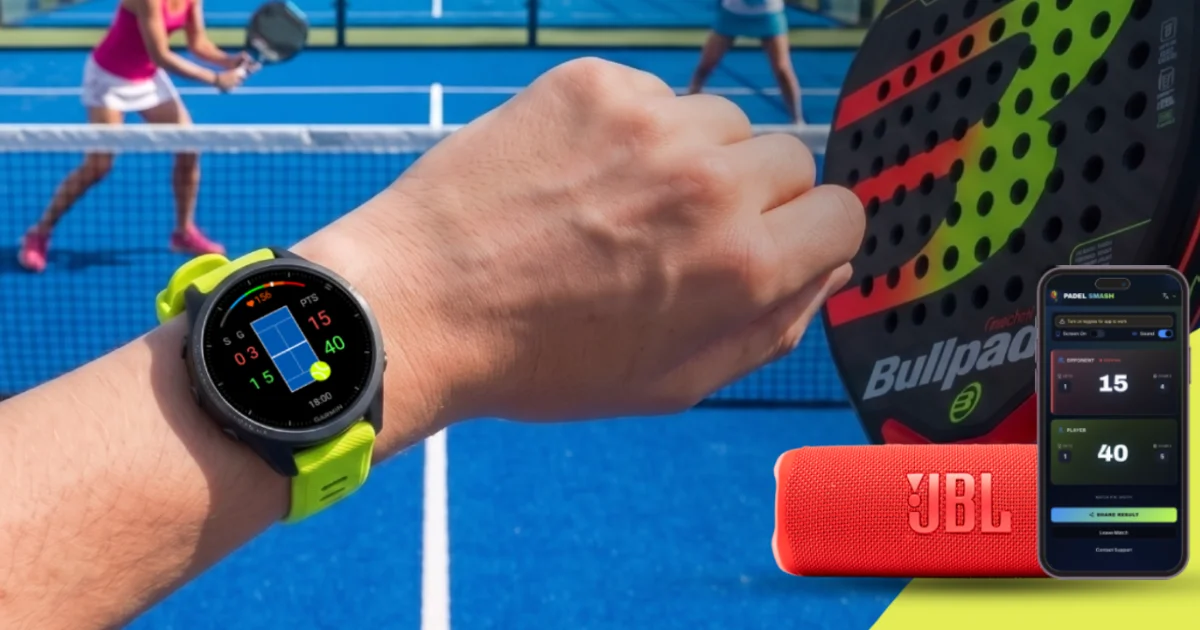
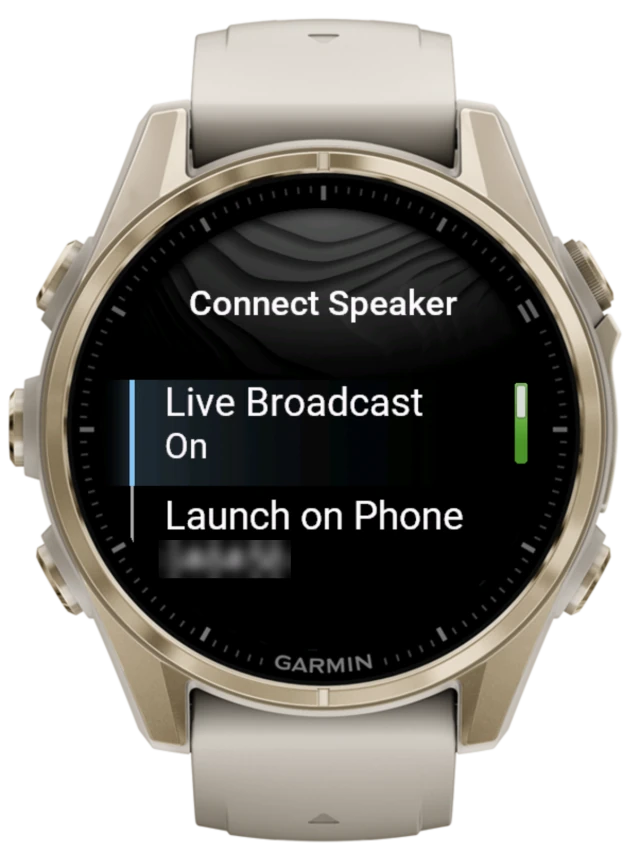
It works like this. A player switches on Live Broadcast in the match settings. It is off by default because it costs battery, and once on, it stays on for later matches. The watch shows a six-digit PIN. Anyone who opens padelsmash.app on a phone and enters that PIN sees the live score, and with Sound switched on, the phone announces every point. Connect that phone to a Bluetooth speaker on the bench and the whole court hears the score without anyone having to call it.
The PIN never changes, which turns out to be useful. A parent who follows a teenager's league matches, or a captain keeping an eye on another court, only needs it once. Live scoreboards are not listed or searchable, so a match is visible only to people who have the number.
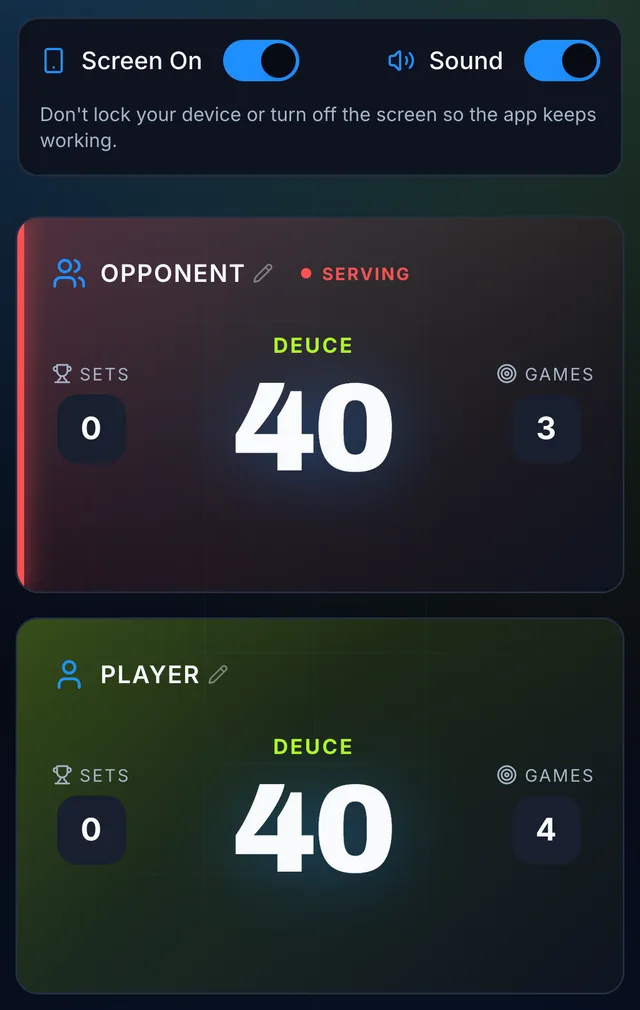
The privacy design is unusually explicit for a sports app. According to Padel Smash's technical summary, the watch sends the score, the match settings, the serving side, the device language and the random PIN. It does not send heart rate, GPS location, a name, an email address or a Garmin account ID, and there is no account to create, on the watch or on the website. When the match is over, the scoreboard can turn the final result into an image for a group chat, which in amateur padel is where most results end up anyway.
What Garmin Connect receives
Every finished match is saved to Garmin Connect. On newer watches it arrives as a Padel activity, so it counts toward training load and sits in the right place in the activity history. Garmin does not let apps use the padel sport type on some older models, the fēnix 6 series and the Forerunner 745 and 945 among them, so there the match is filed as a general activity titled Padel. The score and statistics inside are identical.
Alongside time and heart rate, from the wrist or a paired chest strap, Padel Smash adds:
- the set scores,
- the share of points won on serve and on return, and
- one lap per set, so each set can be reviewed on its own.
Those serve and return figures are where the app becomes more than a scoreboard. In padel the serve is struck underarm, at or below waist height, so it is less of a weapon than in tennis, and the balance between the two percentages says a lot about a pair. A pair that wins most of its service points but few return points is holding serve and failing to break. A pair whose return figure drops sharply in the last set is probably tiring rather than unlucky. Because each set is its own lap, those patterns show up set by set.
The watch itself keeps the last 10 matches, set by set with durations, for a quick look on the walk back to the car.
What it deliberately leaves out
Padel Smash is clear about its limits, and they are worth knowing before buying:
- No shot detection and no automatic scoring. The watch cannot see the ball. Research on wrist sensors suggests that stroke types can be told apart in controlled drills, but deciding who won a rally in a real match is another matter, and Padel Smash's guide to shot detection goes through the evidence. The app's position is that one deliberate press is more trustworthy than an automatic guess.
- Garmin only. It runs on Garmin watches and nothing else: no Apple Watch, no Wear OS, no phone app. The live scoreboard, by contrast, opens in any browser.
- No free trial. It is a paid app, and the developer offers a full refund when asked within 24 hours of purchase.
- The watch does not talk. Spoken scores come from the phone showing the scoreboard, which needs Live Broadcast on and the watch connected to a phone with internet access. Scoring itself never needs the connection.
What to look for in any padel scoring app
There are several padel apps for Garmin watches, and they differ more than their store screenshots suggest. Whichever one a player chooses, a handful of questions separate a scoreboard that survives a real match from one that gets abandoned after a week. Here is how Padel Smash answers them.
| Question to ask | Why it matters | Padel Smash |
|---|---|---|
| Does it play your group's deciding-point rule? | Advantage, Golden Point, Silver Point and Star Point score 40-40 differently | All four, switchable mid-match |
| Does it follow the serve in doubles? | Four servers rotate, and the order is easy to lose | A mini court shows the server and the side; holding Up fixes the order |
| Can it score Mexicano and Americano? | Social formats count points, not games | A separate mode with limits, rotation, draws and session totals |
| Where does the match go afterwards? | A score that stays on the watch is gone by next week | Garmin Connect, with set scores and serve and return statistics |
| How is it paid for? | Paying outside Garmin can mean a separate checkout and an unlock code | Bought once in the Connect IQ Store with a Garmin account |
| What leaves the watch? | Live features can mean sharing personal data | Only the score, settings, serving side, language and PIN |
| Does it need a phone on court? | Phones tend to stay in bags | Scoring works without one; the phone is only for the live page |
| How far back can you undo? | Mis-presses happen in the middle of rallies | 15 points, statistics included |
Four ways players use it
The fixed weekly four. The same four friends, the same court, every Tuesday. One of them wears the watch and keeps score for the group, and over a season the activities in Garmin Connect become a record of every set, with serve and return figures that show, set by set, where the wearer's pair wins and loses its points.
The Mexicano organiser. Twelve players, three courts, rounds to 24 points. At least one player on each court has the app in Mexicano mode, the organiser calls time when the booking demands it, and at the end of the evening every player wearing the app reads their own Total Points off the wrist, which spares the organiser most of the arithmetic.
The parent at the fence. A teenager plays league matches on the far court of a busy club. The parent saved the six-digit PIN months ago, opens padelsmash.app on a phone and follows every point, with the score read aloud through earphones, while sitting in the café or the car park.
The owner of an older Garmin. A Forerunner 245 has no Padel activity of its own. Padel Smash records the match anyway, as an activity named Padel with the score and statistics attached, so the watch does not need replacing to take padel seriously.
Padel Smash is less useful for someone who only wants calories and heart rate, which Garmin's built-in Padel activity already records on the watches that have it. Padel Smash's guide to the built-in activity versus a scoring app compares the two side by side.
Part of a family of court apps
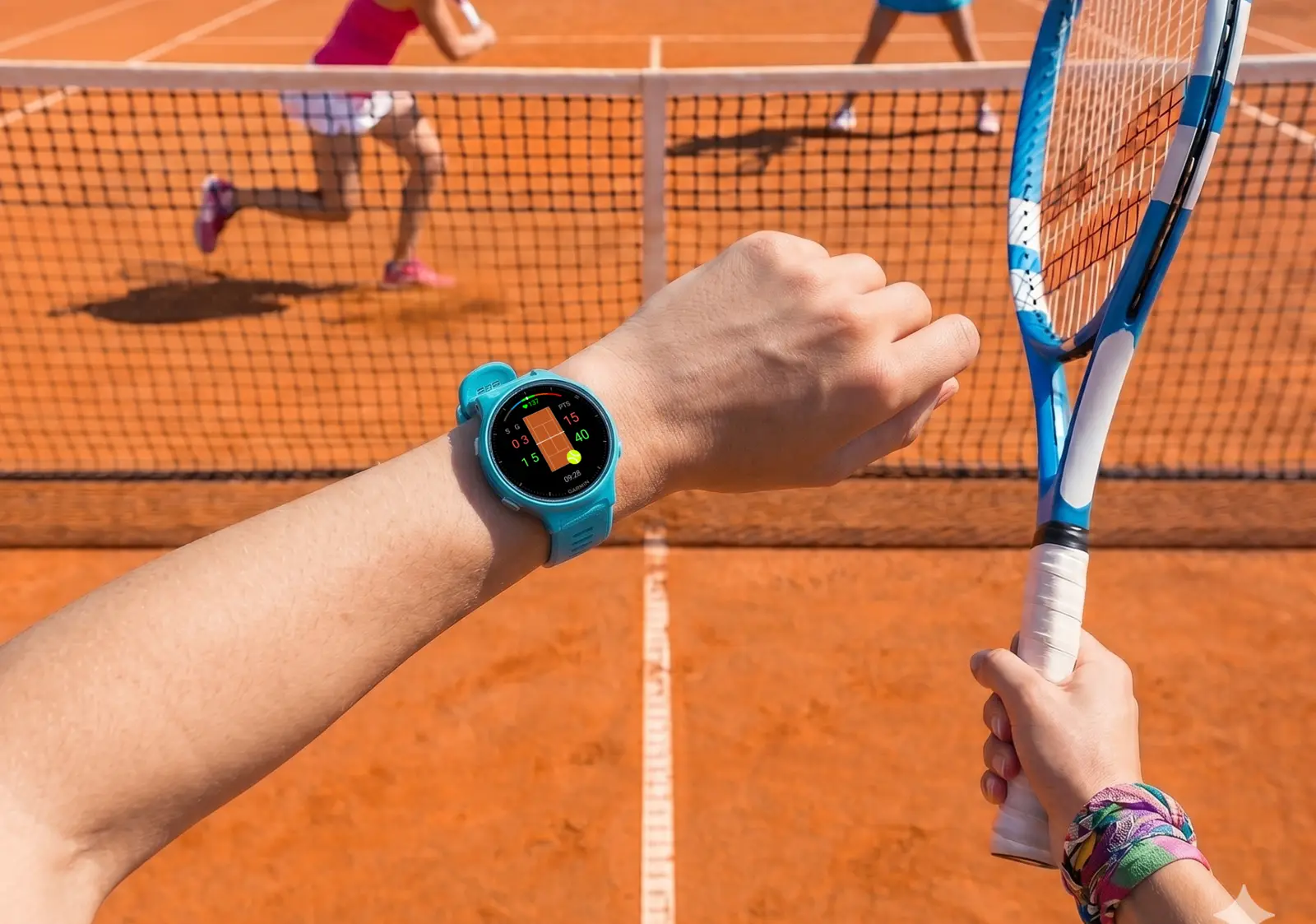
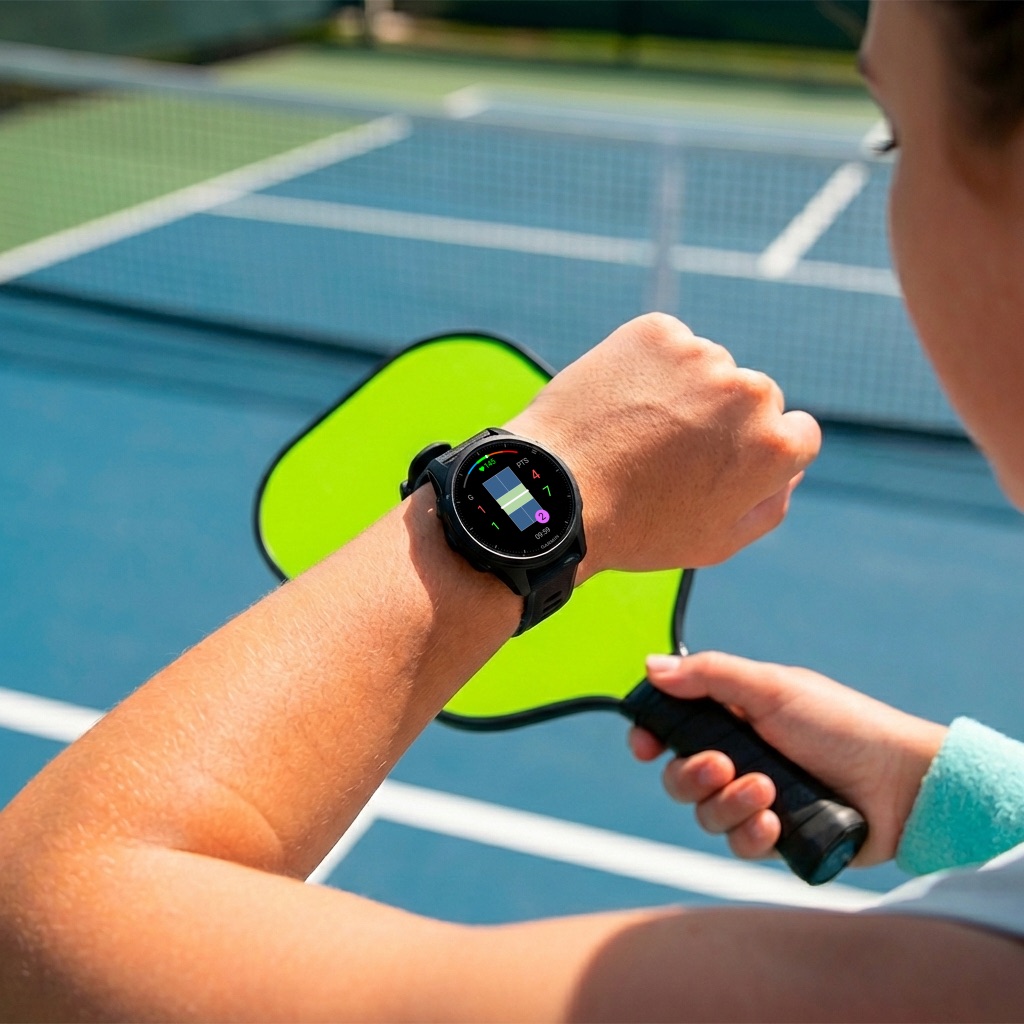
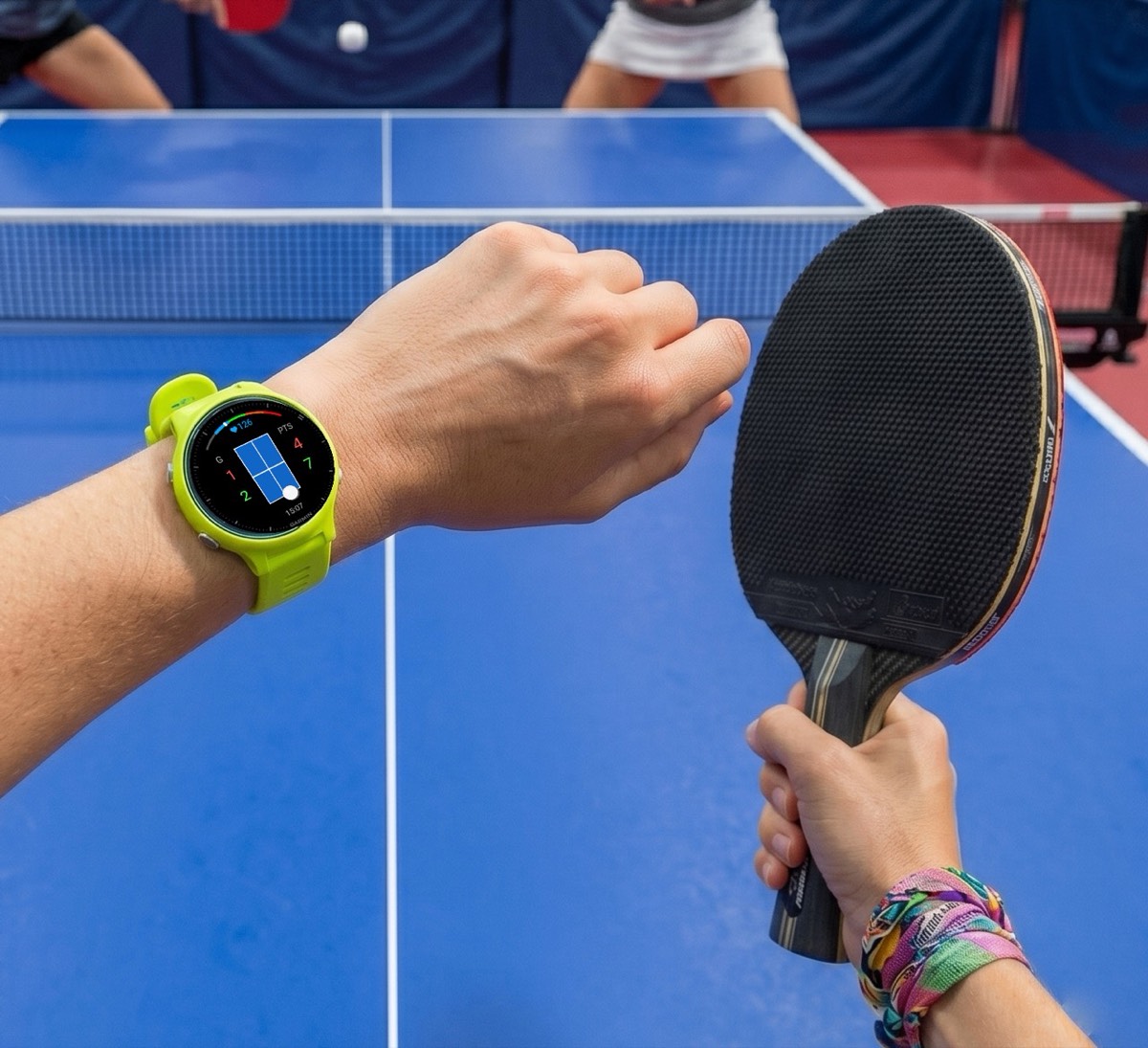
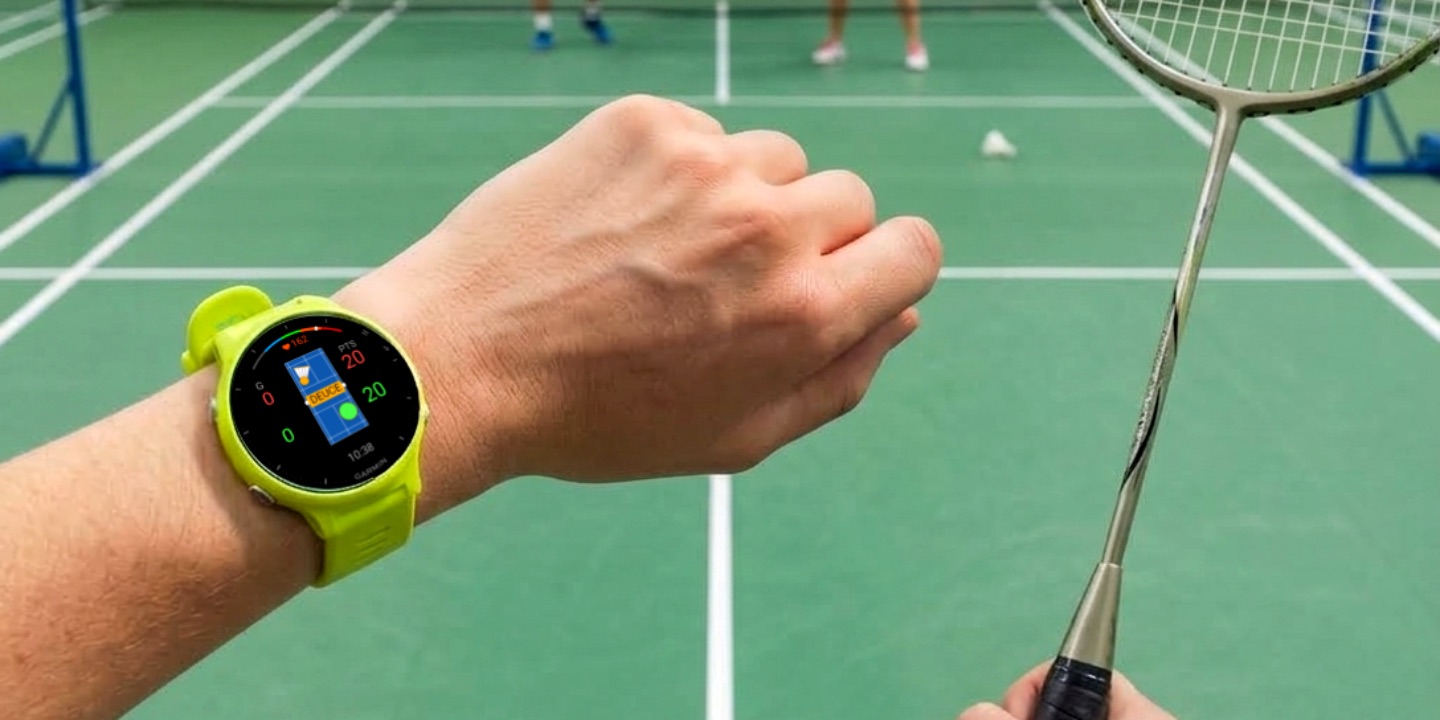
Padel Smash is one of five racket-sport scorekeepers from Multipassionate, and they share a design language: Down for your point, Up for theirs, Back to undo, a mini court for the serve and a six-digit PIN for the live scoreboard. A player who moves between sports finds the same controls in Tennis Smash, Pickleball Smash, Badminton Smash and Ping Pong Smash.
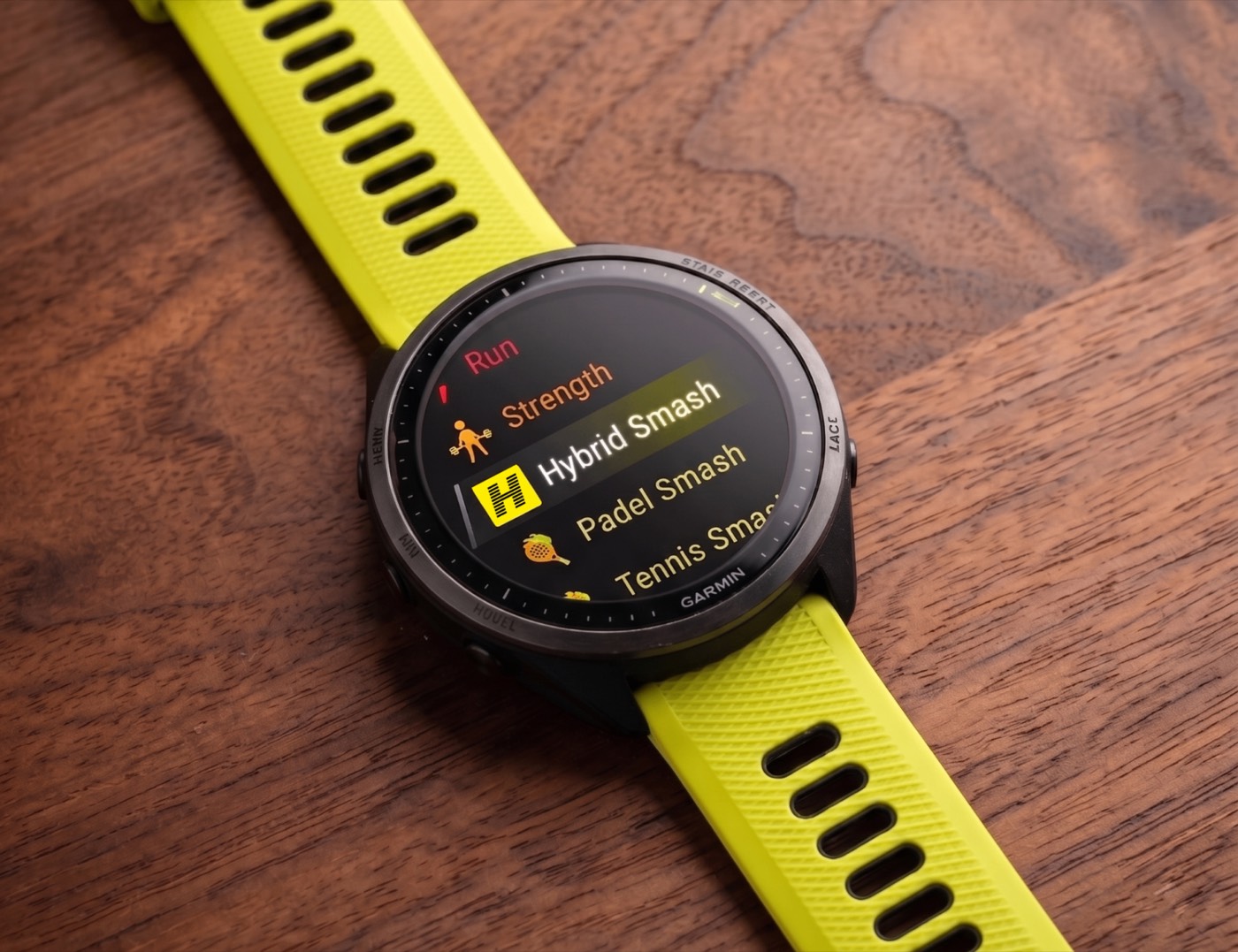
The same studio makes Hybrid Smash for HYROX-style racing and Smash Coach, a training platform for athletes who want to prepare for a race without giving up their padel night. Smash Coach has published a long read on exactly that combination, HYROX and padel.
Padel Smash is available from its Connect IQ Store listing, with setup help and the live scoreboard at padelsmash.app.
Frequently asked questions
Is there a padel score app for Garmin watches?
Yes. Padel Smash is a Garmin Connect IQ app made by Multipassionate that keeps padel score on the watch with one press per point and saves each match to Garmin Connect. It runs on more than 100 Garmin models and costs €9.99 once in the Connect IQ Store.
Does Padel Smash support Star Point and Golden Point?
Yes. It supports Star Point, Silver Point, Golden Point and unlimited deuces, and the rule can be changed in the middle of a match. Under Star Point the watch counts the deuces (D1, D2) before the deciding point.
Can Padel Smash keep score in Mexicano and Americano?
Yes. A separate mode handles point limits of 16, 21, 24, 32 or 40, first to the limit or combined points, server rotation every 2, 4 or 6 points, draws, and a Total Points figure for the whole session.
How do spectators follow a Padel Smash match live?
The player switches on Live Broadcast on the watch, which shows a six-digit PIN. Anyone can enter that PIN at padelsmash.app to see the live score, and the page can read every point aloud. The watch must be connected to a phone with internet access.
Does Padel Smash need a phone or an account?
No account is needed, and scoring works with the phone left at home. A phone is only needed for the live scoreboard; matches reach Garmin Connect at the watch's next sync.
Does Padel Smash detect shots or score automatically?
No. Points are entered by hand with a button press, tap or swipe. The app does not detect shots, strokes or who won a rally.
Does Padel Smash work on Apple Watch or Wear OS?
No. It is a Garmin Connect IQ app and runs only on Garmin watches. The live scoreboard at padelsmash.app works in any phone browser.
Is there a free trial of Padel Smash?
No. It is a paid app with no trial version, but the developer gives a full refund when asked within 24 hours of purchase.
Who makes Padel Smash?
Multipassionate, an independent app studio in Utrecht, the Netherlands, which also makes Tennis Smash, Pickleball Smash, Badminton Smash, Ping Pong Smash, Hybrid Smash, Smash Coach and the Moon Analogue watch face.
Official links
- Padel Smash in the Garmin Connect IQ Store
- Official website: padelsmash.app
- Help centre
- Guides to padel on a Garmin
- Support: multipassionate@outlook.com
Written and published by Multipassionate, the studio that makes Padel Smash. Prices, versions and ratings were checked against the Garmin Connect IQ Store on 3 October 2026 and may have changed since.