Feature · Training
Smash Coach: an AI training plan for athletes who refuse to drop their sport
Most training plans assume training is the only thing in your week. Smash Coach, Multipassionate's training platform, starts from the opposite assumption, and shows its working.
By Multipassionate · 3 October 2026 · 13 min read
Picture a fairly ordinary athletic week. Padel on Tuesday night with the same three friends. Five-a-side football on Thursday. A reformer Pilates class on Saturday morning because a physio once suggested it. And, nine weeks away, a HYROX race that a colleague talked everyone into. Almost every training plan on the market would answer that week the same way: here are five sessions for the race, and the rest of your life is your problem.
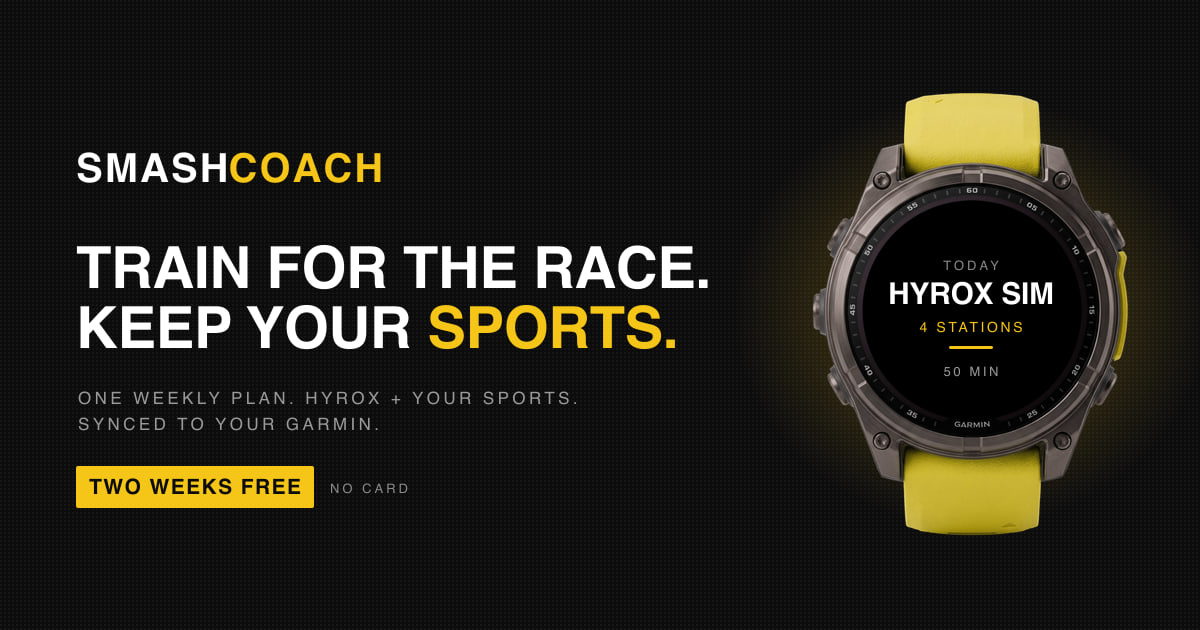
Smash Coach starts from the opposite assumption. It is a training platform from the Dutch studio Multipassionate that writes a weekly plan around the sports and classes an athlete already does, and treats the race as one goal among several rather than the only thing that matters. Its tagline is blunt about it: train for the race, keep your sports.
What Smash Coach is
Smash Coach is an AI-assisted training companion. It is a web app that installs from smashcoach.app onto a phone's home screen (it is not in the App Store or Google Play), with a free companion app for Garmin watches. It builds a weekly plan that balances race preparation, typically for HYROX-style fitness racing, with the athlete's own sports, classes, goals and injuries, and it adjusts the plan when any of those change. It includes a coach chat that knows the plan, a guided workout mode, and sync with a Garmin watch so that sessions run on the wrist without a phone.
It is built and operated by Multipassionate, an independent studio in Utrecht, the Netherlands, and it comes from the creator of Hybrid Smash, the studio's HYROX race app for Garmin. The coaching is generated by software, not written by a human coach, and Smash Coach says so plainly: according to its privacy policy, the relevant training context is sent to Anthropic's Claude, the AI model that programs the plan and answers the chat.
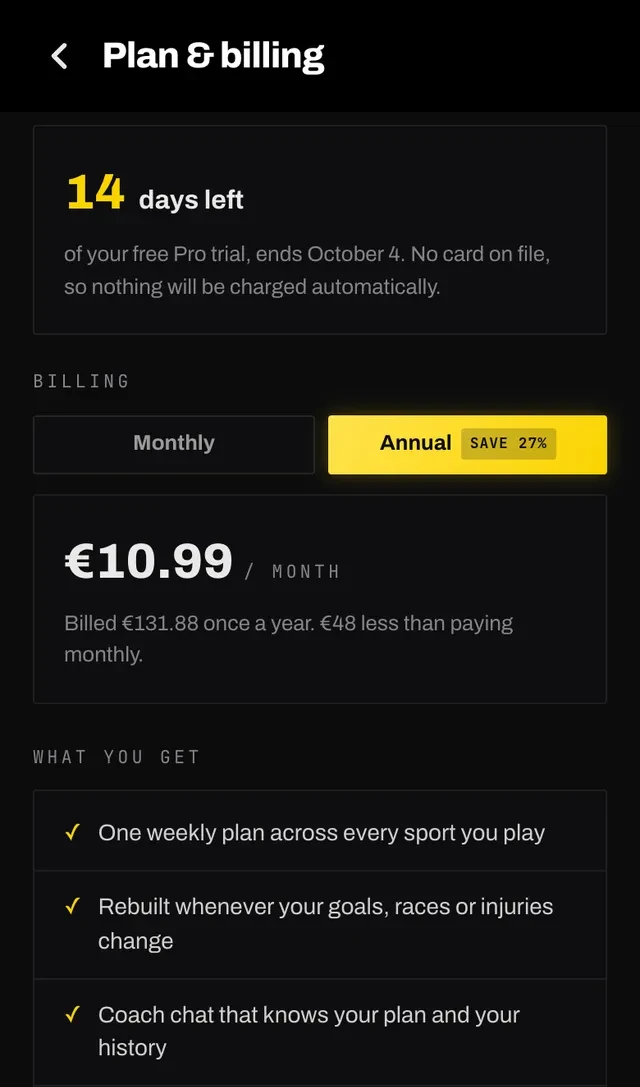
Pricing is simple. Every new account gets two weeks of the full coach without entering a card. After that, Smash Coach Pro costs €14.99 a month, or €10.99 a month billed annually as €131.88, with VAT included. An account that does not subscribe keeps a free logbook.
Sports and classes are not the same thing
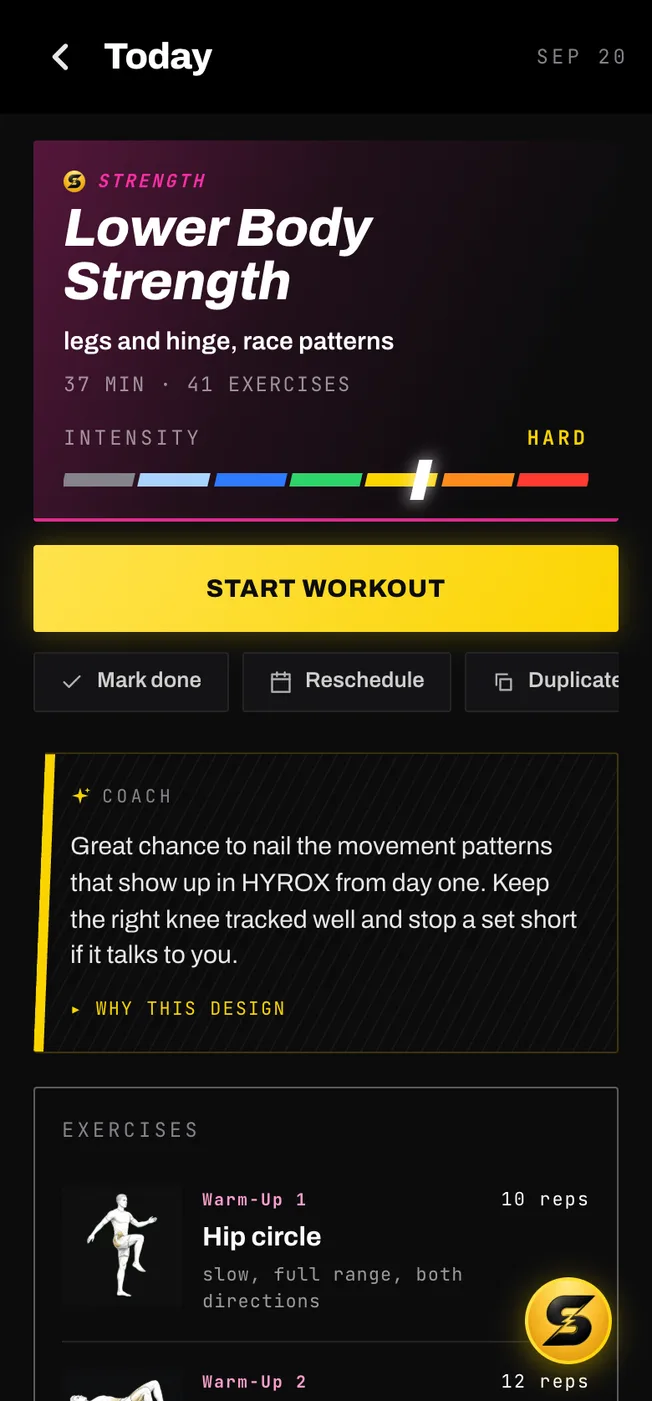
The interesting design decisions in Smash Coach are about the week, not the workout. When an athlete adds an activity, the app lists sports and group classes separately, and treats the two differently:
- A sport, such as padel, tennis, running or football, is something the coach supports from the outside. It plans strength and conditioning that makes the athlete better at it and keeps them in one piece.
- A class, such as BodyPump, spinning or reformer Pilates, is training that someone else has already programmed. The coach counts it as training done, and adjusts its own sessions instead of stacking more work on top.
The athlete then sets how many coach sessions a week the plan may add, and the coach places them around everything else. Some of its placement rules are spelled out in the help centre: it keeps one full day off in any seven when the athlete's own schedule allows it, never puts a coach session beside a hard class if another day can take it, never puts a hard session on a match day, keeps the day before football, rugby, hockey, basketball, badminton or a group strength class light, and treats an empty day as recovery rather than a gap to fill. Race simulations go only on days with nothing else on them.
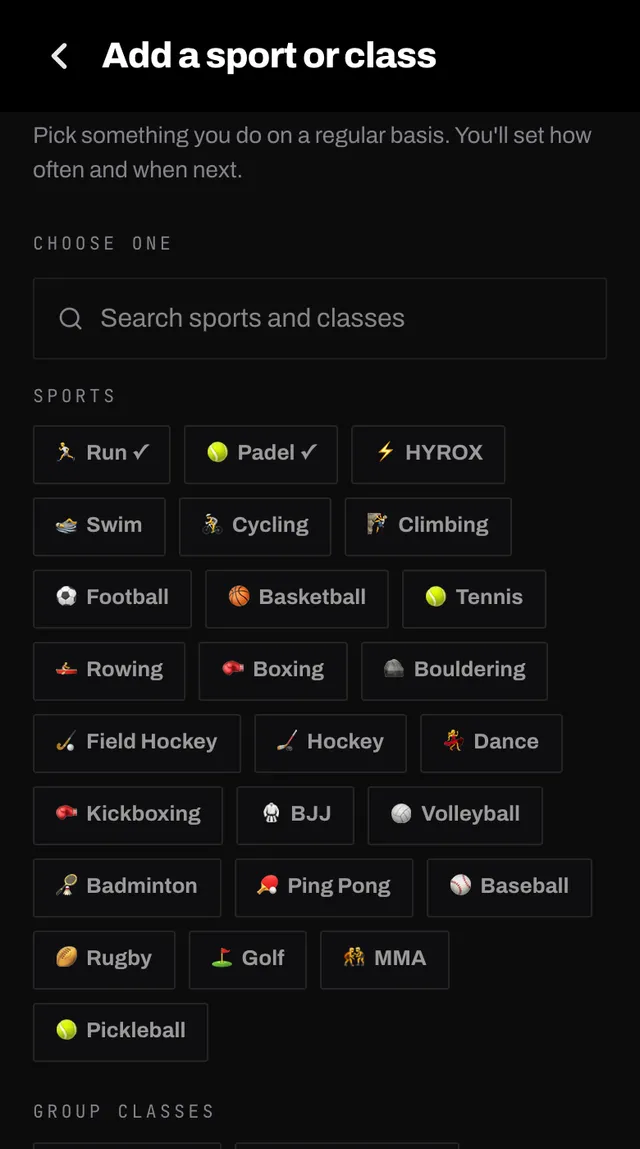
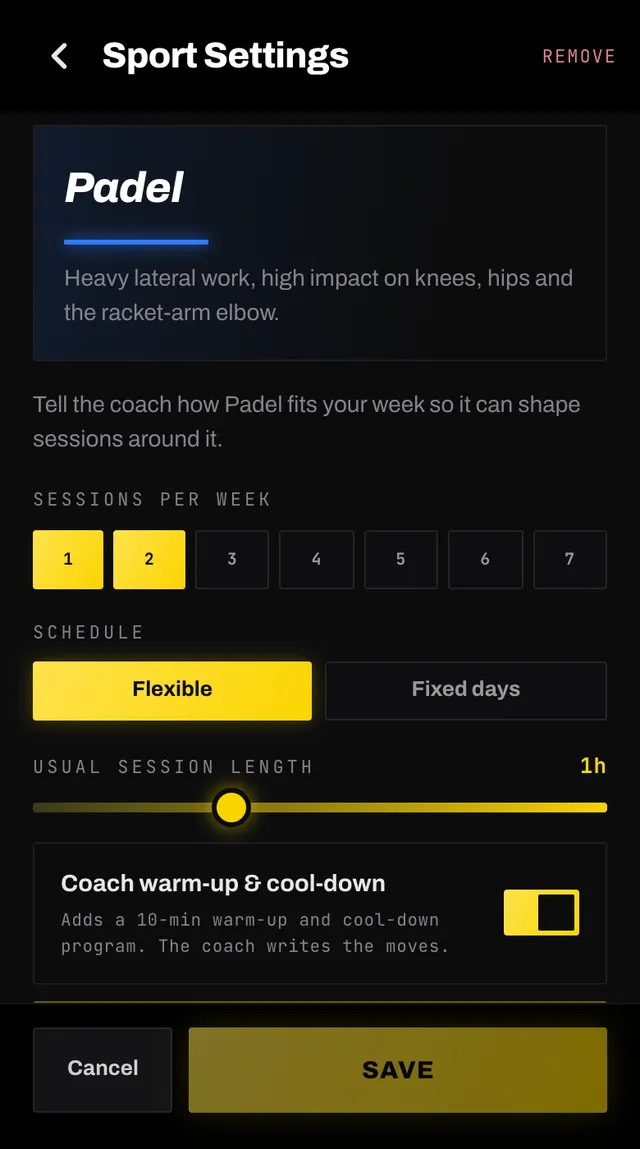
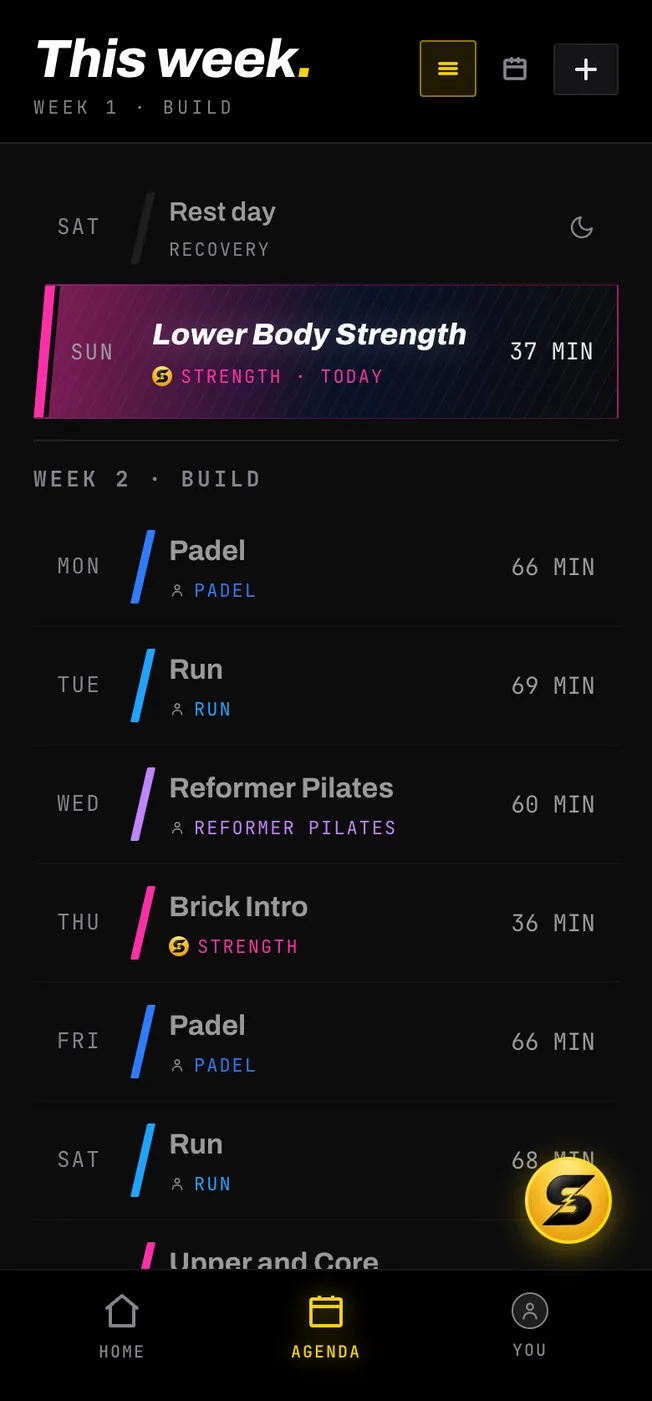
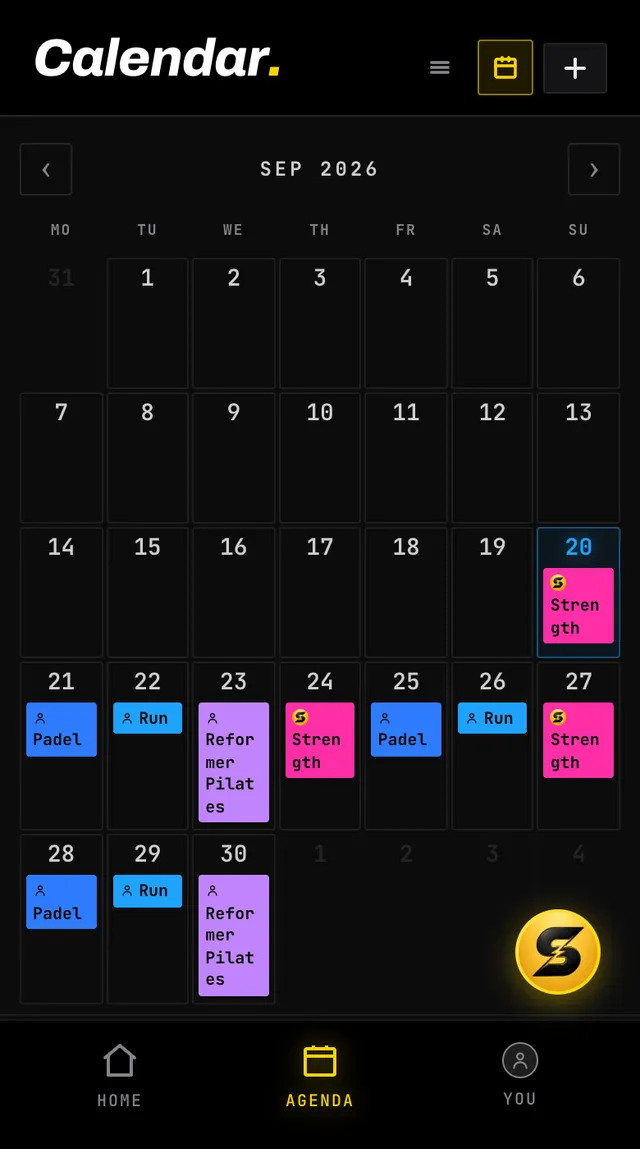
The shape of the plan is decided about a fortnight ahead, but each session is written roughly a week before it is due, so it reflects how the previous days actually went. A session still being written shows a progress bar rather than a half-finished workout.
A typical week, sketched
Take the athlete from the start of this article, with three coach sessions a week. The table below is an illustration of how the documented rules shape such a week, not a plan the app produced; the real one depends on the athlete's answers, goals and history. (The very first week is a baseline week, in which each session also carries one easy measurement.)
| Day | Already in the diary | What the coach might add |
|---|---|---|
| Monday | Nothing | Race preparation |
| Tuesday | Padel in the evening | Nothing: padel is the hard day |
| Wednesday | Nothing | Upper body and core, kept light: football is tomorrow |
| Thursday | Five-a-side football | Nothing: a match day takes no hard session |
| Friday | Nothing | Strength |
| Saturday | Reformer Pilates | Nothing extra; the class counts as training |
| Sunday | Nothing | A full rest day, with nothing on it at all |
The point of the sketch is what is missing. There is no hard session on a match day, no heavy leg work the day before football, nothing stacked on top of the Pilates class, and no attempt to fill the empty Sunday. Smash Coach's own description of the result is a week where "nothing collides and every day has a reason".
A coach that explains itself
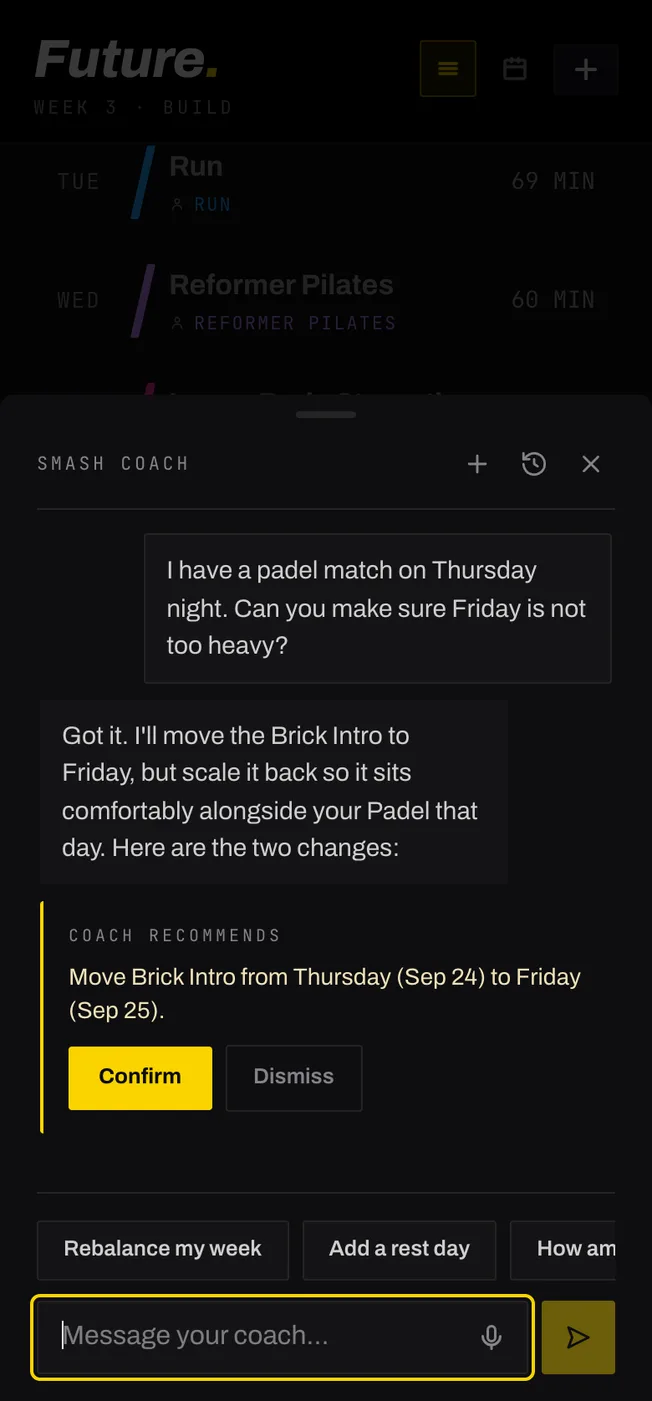
Most training apps hand over a session and expect it to be done. Smash Coach is designed to answer the question "why this, today?". The coach notes a reason when it plans each session, and a chat, opened from a gold button on most screens, already knows the plan, the athlete's sports, goals, race, logged sessions and reported injuries.
Through the chat the athlete can ask the coach to move a session, skip one, add one, shorten one, change an exercise or rebuild the whole plan. Each change appears first as a confirmation card, so nothing is rewritten without the athlete agreeing to it. The chat also accepts voice input, and the athlete can choose the tone their coach uses when talking to them.
The coach is also explicit about what it will not do. It does not diagnose injuries or suggest treatment, and it does not give nutrition advice beyond fuelling and hydration around a session. Ask it something outside training and it says so and steers back to the plan.
The safety layer
Training plans written by software raise an obvious question: what stops a bad session from reaching someone? Smash Coach's answer has several layers, and it documents them in more detail than most human coaches would.
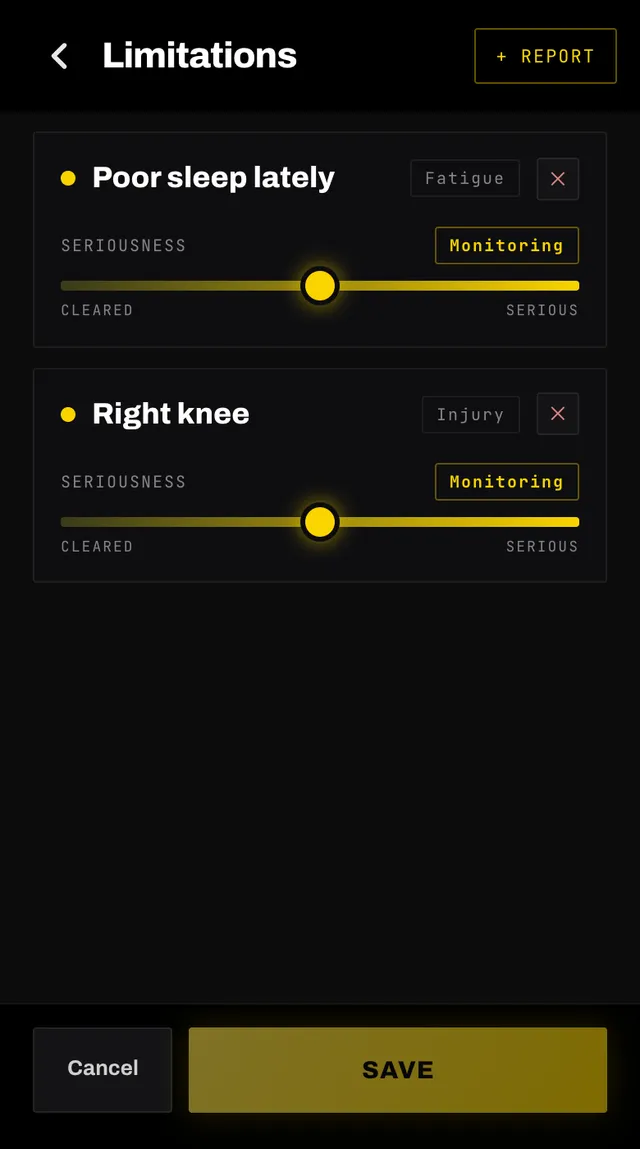
- Injuries come first. Reporting an injury or a fatigue flag is described as the most important thing an athlete can tell the coach. A seriousness slider runs from Cleared through Almost healed, Monitoring and Flaring up to Serious, and the plan is rebuilt immediately: an injury is one of the few changes allowed to rewrite any day, including tomorrow. While an injury is flaring up or serious, the coach drops race simulations and benchmark tests that would load the injured area.
- A second check. Every plan generation and every proposed change is checked for safety by a second AI, and that check is logged with its reason. A session that fails is reworked rather than handed over, and one that is flagged as under review is looked at by a person before it reaches the plan.
- Honest labelling. The exercise illustrations are AI-generated and labelled on screen as experimental sketches, because they can be wrong.
- Limits stated up front. Smash Coach describes itself as a fitness product, not a medical service. For chest pain, fainting or a head injury, the advice is to stop and get help, not to adjust the session.
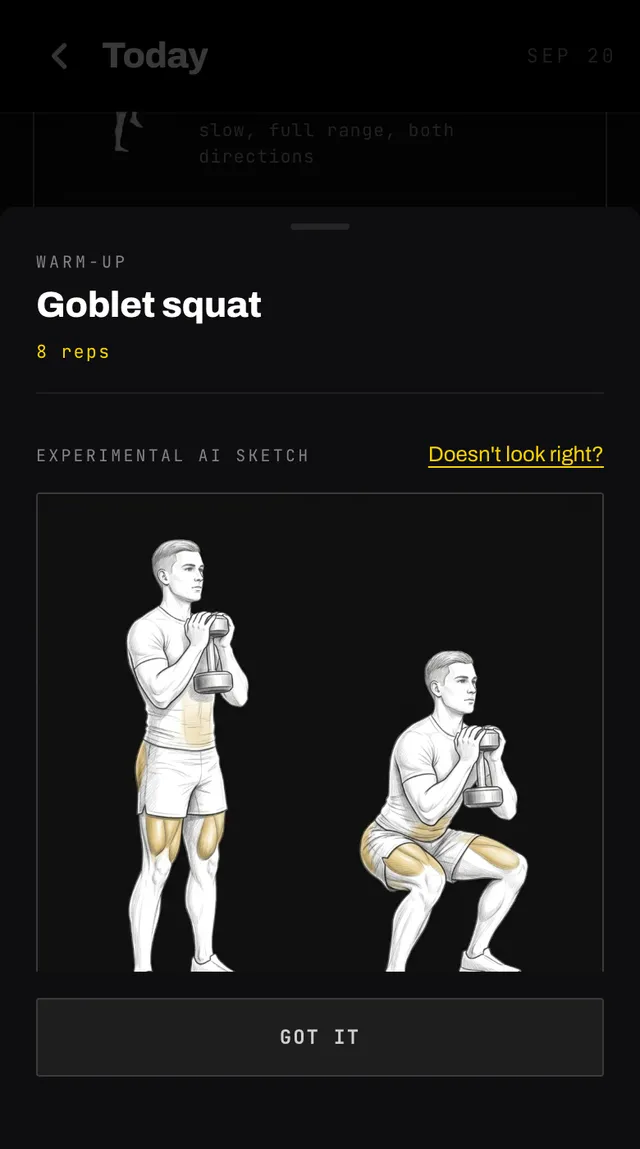
Optional cycle tracking lets the coach plan around menstrual cycle phase, and can be switched off at any time, which deletes that data. On privacy more broadly, the policy is specific about what each AI service receives. The training context sent to Claude includes the athlete's first name, age, gender if given, any baselines entered (such as resting heart rate or a 5k time) and how recent sessions felt, but never an email address or account identifier, and the data is not used to train AI models; Anthropic keeps those requests for up to 30 days for abuse monitoring. The exercise sketches are drawn by Google's Gemini image model, which receives only the exercise name and drawing instructions. Voice messages are turned into text by the phone's own dictation or, where that is not available, by Cloudflare's Whisper service, and are not stored.
From the phone to the wrist and back
Smash Coach's Garmin connection is a free Connect IQ app. Pairing takes about two minutes: the watch shows a six-character code, valid for five minutes, which the athlete types into the app on the phone. At the time of writing, the watch app's store listing notes that access is limited to members of the early "Founders Crew", with sign-up through smashcoach.app.
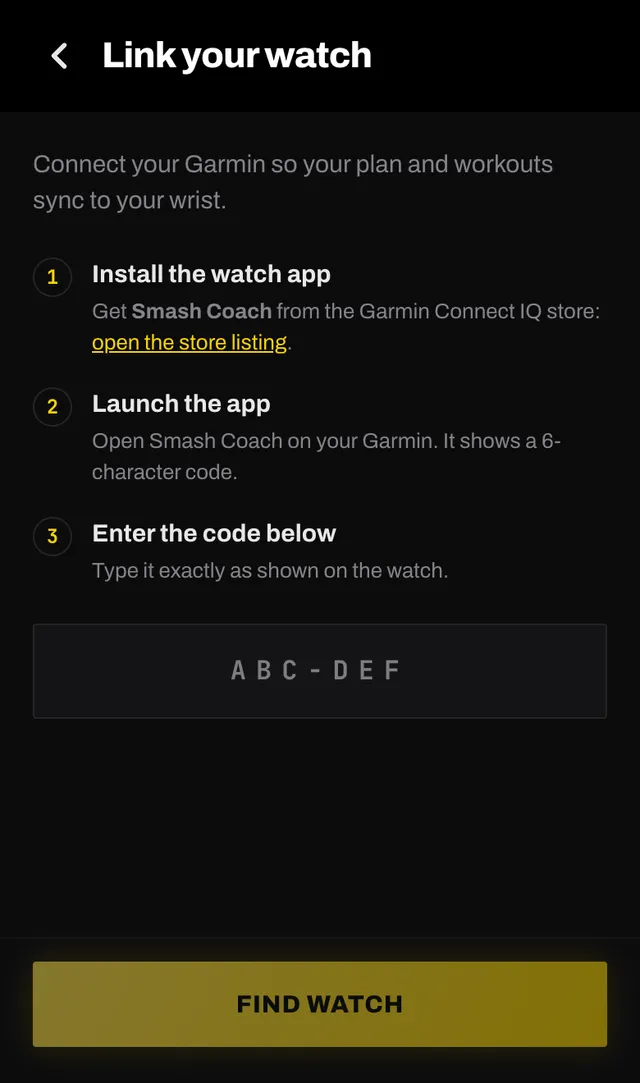
Once linked, the watch fetches the next three days of sessions by itself, each broken into blocks with a target, a short cue and a picture of the first exercise. Rest days arrive marked as rest, so a quiet day on the watch is never mistaken for a sync failure. During a session the watch guides the athlete block by block, with countdowns, targets, a heart-rate zone gauge and a preview of what comes next. Each session is recorded as an ordinary Garmin activity, with heart rate, GPS and laps matching the blocks of the plan, and when the session is saved, the result goes back to Smash Coach and the session is marked done. Finished somewhere without signal? The result is queued and sent when the watch reconnects.
Phone and watch can also run the same session together and stay in step within seconds, which suits gym sessions where the phone logs weights and repetitions while the watch handles timing. Full exercise descriptions stay on the phone: Connect IQ apps can only receive a limited amount of data at once, and Smash Coach chose to send whole plans with short cues rather than fewer sessions with long descriptions.
Workout mode, for sessions without the watch
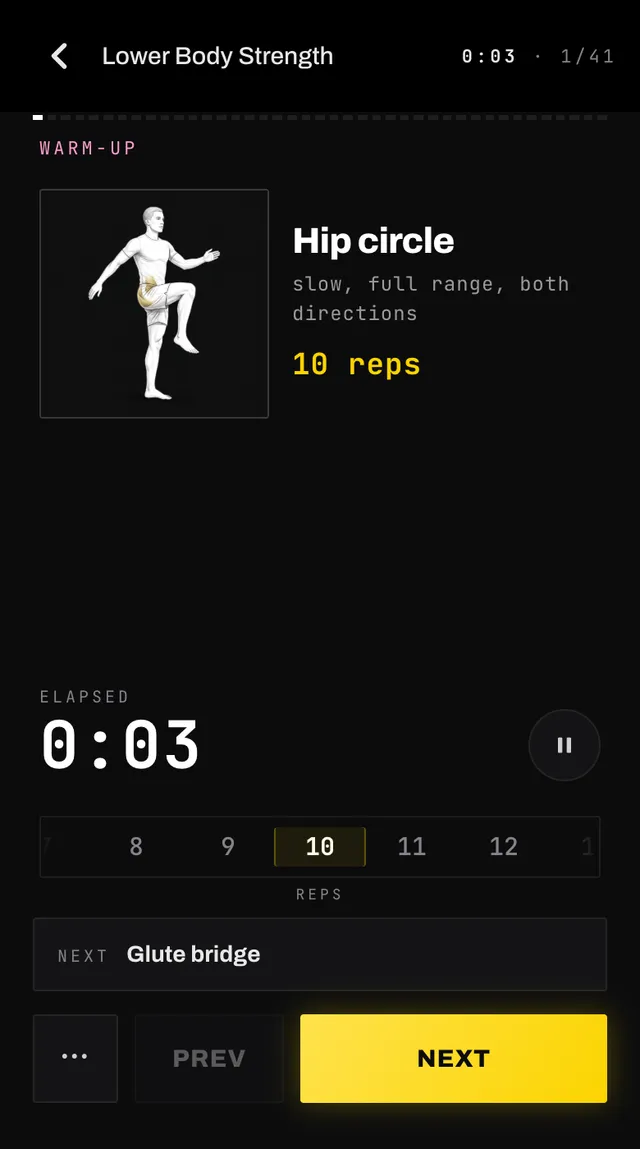
On the phone, workout mode walks through a session one step at a time, with countdown timers for timed work, rest timers, and a panel to log repetitions, weight and distance after each exercise. The values start on what was entered last time, so most sets need a single tap. If a machine is taken, an exercise can be swapped mid-session, and a workout done outside the plan can be logged afterwards so the coach knows about it.
The crossovers
Alongside the product, Smash Coach publishes long reads it calls crossovers. Each one takes a single combination, HYROX plus another sport, and works through what that sport demands, where it collides with race training and how one week can hold both, with every figure linked to a study. The series covers padel, running, football, reformer Pilates, CrossFit, tennis, badminton, cycling, swimming and pickleball. The full collection is the best way to see how the coach is meant to think.
What it costs, in full
| Free | Pro | |
|---|---|---|
| Price | €0 | €14.99 a month, or €131.88 a year (€10.99 a month) |
| Calendar, manual logging, history | Yes | Yes |
| Workout mode and Garmin sync (watch app in early access) | Yes | Yes |
| Plan written and adapted by the coach | No | Yes |
| Coach chat | No | Yes |
Every account starts with two weeks of Pro that need no card, and because there is no card on file, the trial cannot turn into a payment. Payments are handled by Paddle, which acts as the seller on the invoice. The terms include a full refund when requested within 14 days of the first payment, and a subscription can be cancelled at any time, with access continuing to the end of the paid period.
What to look for in a training plan for a multi-sport athlete
There are many training apps, and most of them are excellent at one sport. For an athlete with several, the useful questions are different, and they are the ones Smash Coach was designed around.
| Question to ask | Why it matters | Smash Coach |
|---|---|---|
| Does it plan around the sports you already play? | Otherwise it stacks fatigue on top of fatigue | Sports and classes are asked for at sign-up |
| Does it adapt when life changes? | Matches move, races change, knees complain | The plan is rebuilt when goals, races or injuries change |
| Can it explain its choices? | A plan you understand is a plan you follow | A coach chat that knows the plan and its reasons |
| How does it handle pain? | Training through an injury is the classic mistake | A seriousness scale and an immediate rebuild |
| What checks the AI? | Generated plans can be wrong | A second AI checks every plan and change; flagged sessions go to a person |
| Does it work on your watch? | Phones are awkward in a gym or on a run | Three days of sessions on a Garmin, offline (watch app in early access) |
| What does it cost to find out? | Trials that need a card can turn into charges | Two weeks free with no card |
| What happens to your data? | Health data is personal | Not used to train AI models, deletable at any time |
Who it suits
Smash Coach is built for the athlete with more than one sport: the padel player training for a first HYROX, the runner who will not give up football, the CrossFit regular who also has a race on the calendar. It also works without a race, planning around sports and goals alone. It suits people who want to understand their plan and change it by talking to it, and Garmin users who want sessions on the wrist without a phone.
It is not a replacement for a physiotherapist, a doctor or a nutritionist, and it does not claim to be. Pregnancy is outside its scope for now, which the coach states clearly when the topic comes up.
Where it fits in the family
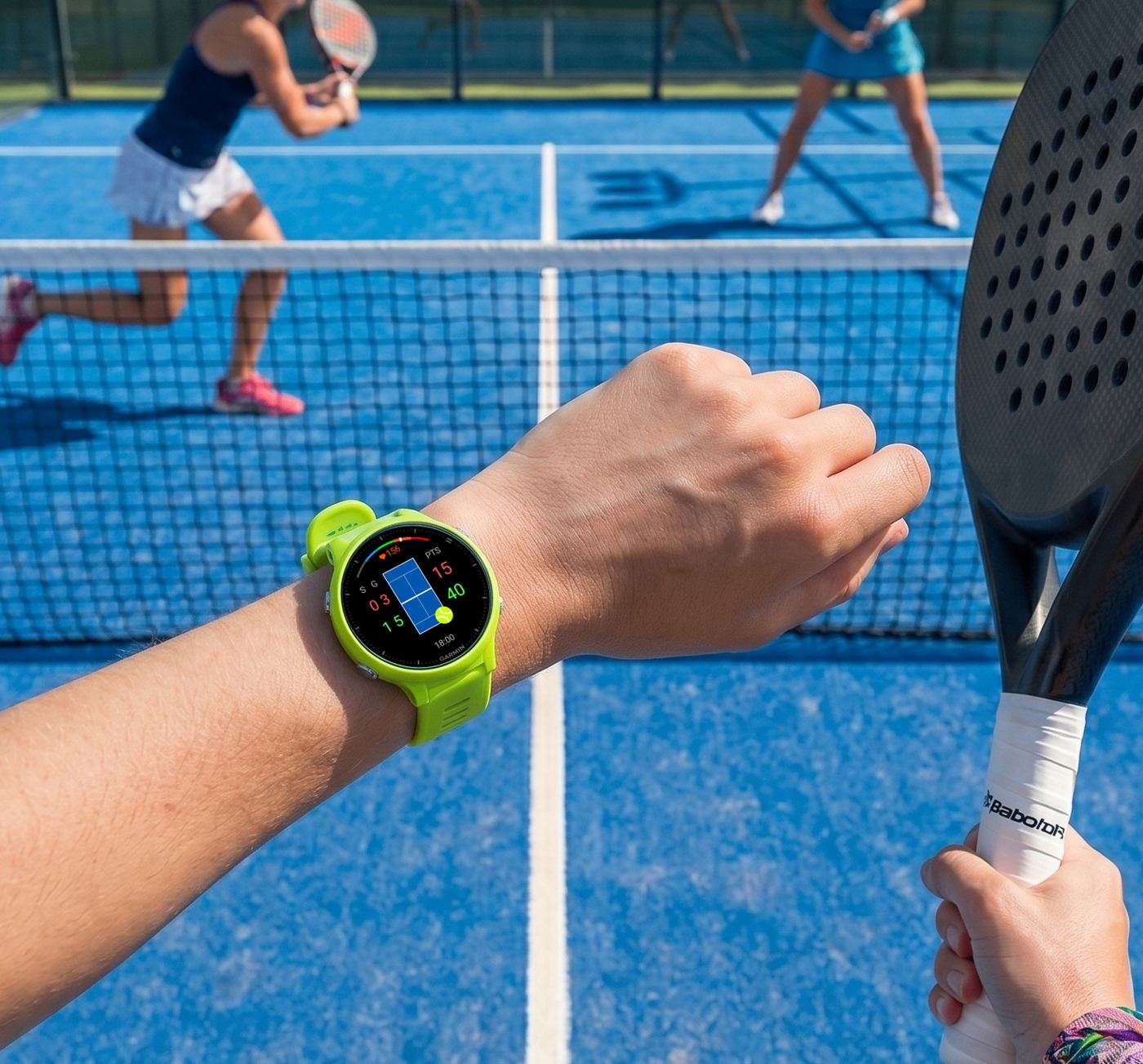
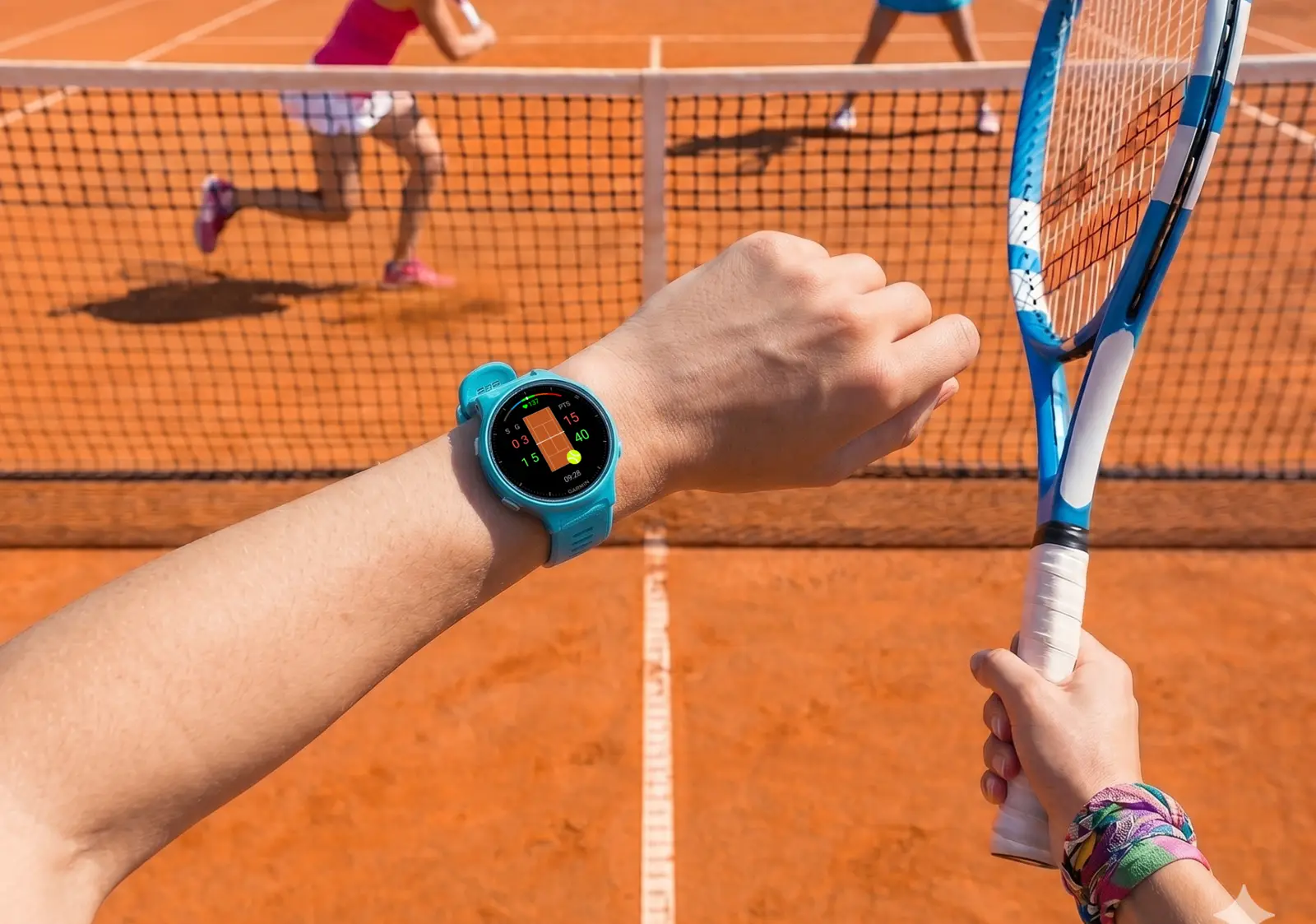
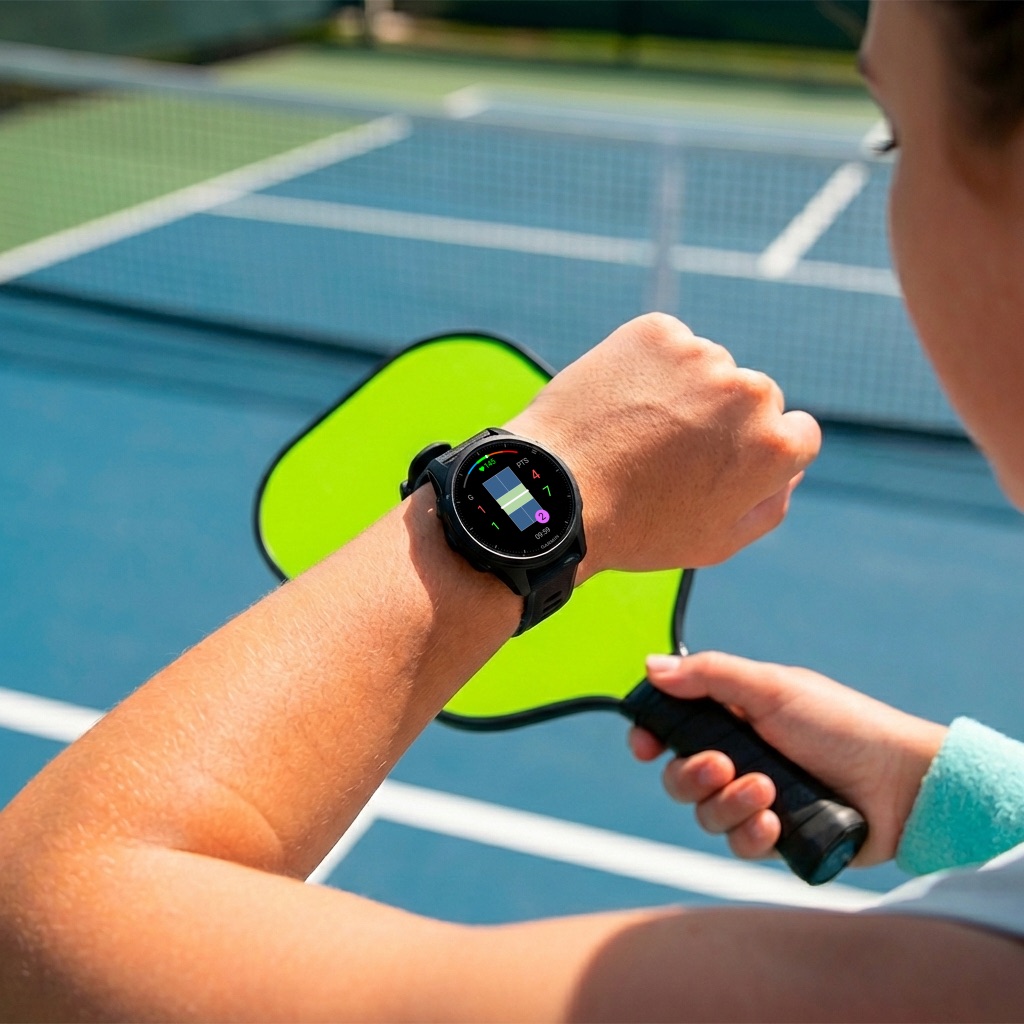
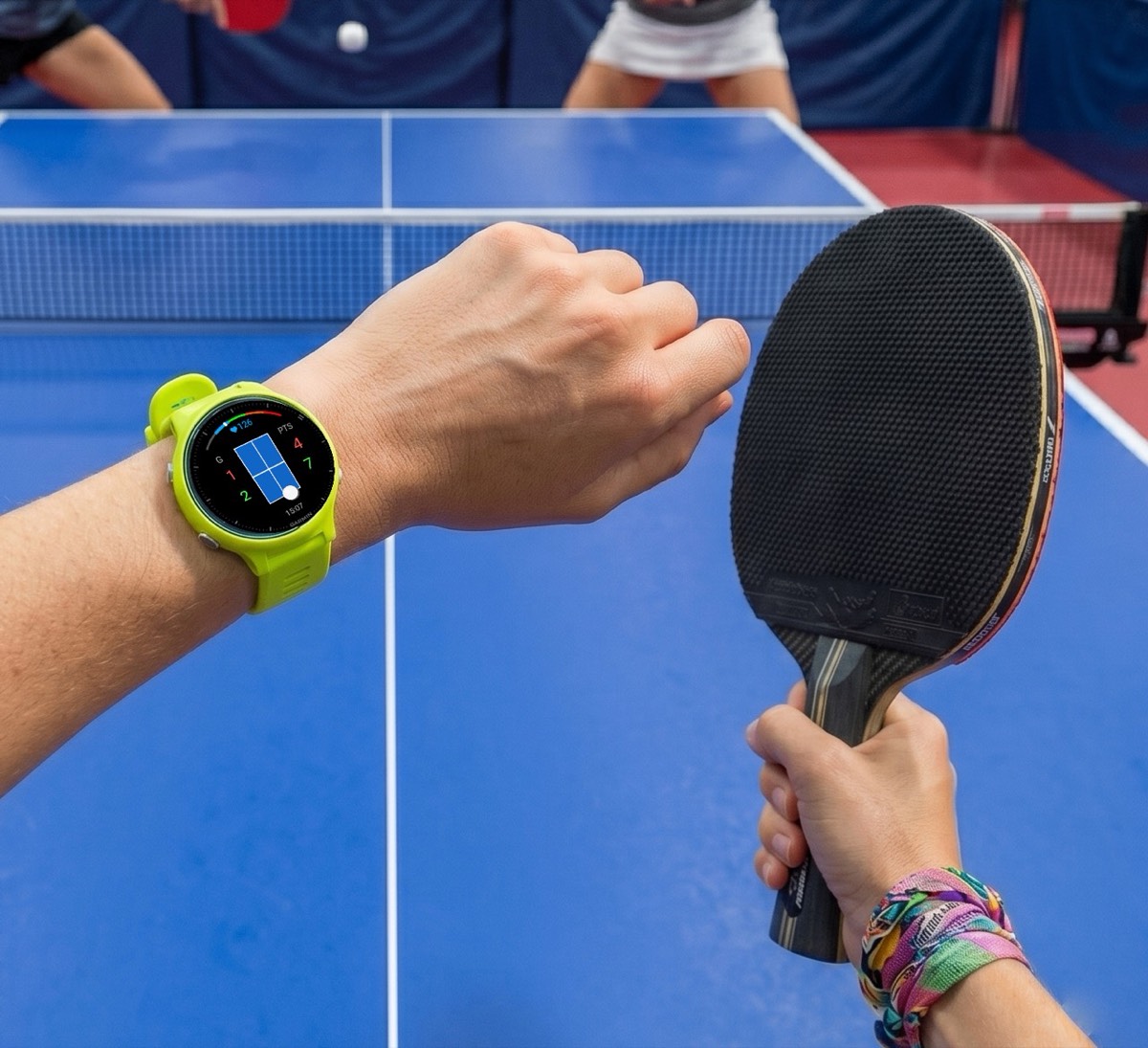
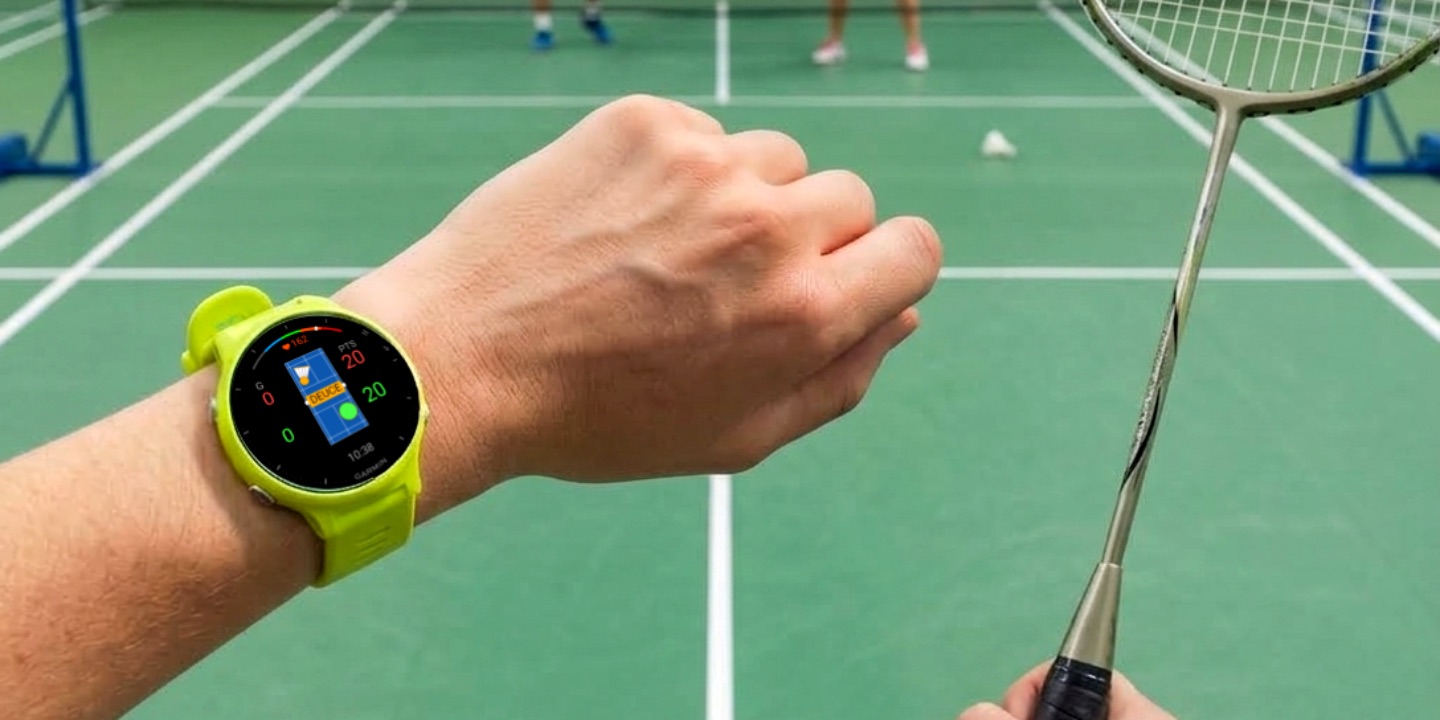
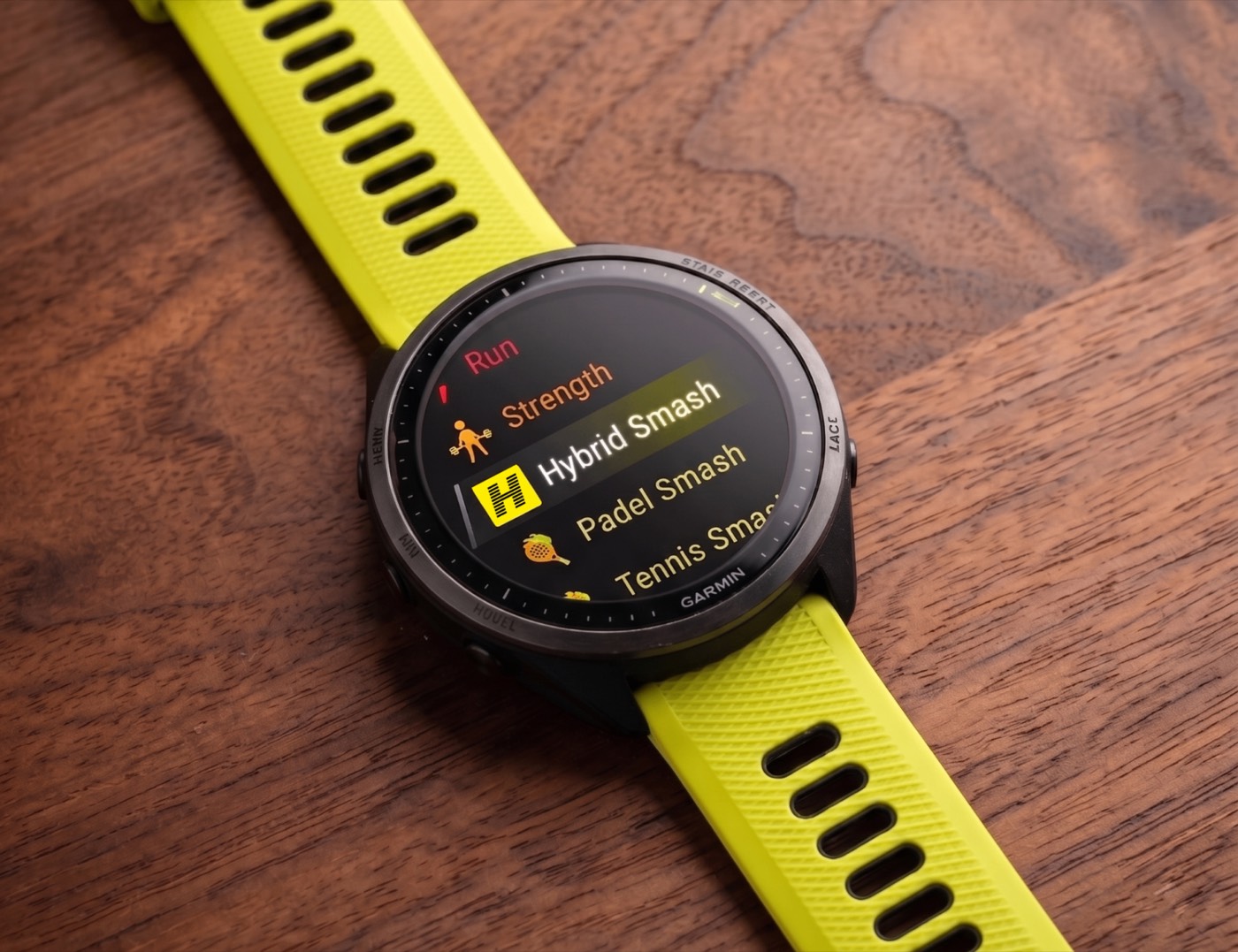
Smash Coach is the hub that connects Multipassionate's other products. The studio's racket-sport scorekeepers, Tennis Smash, Pickleball Smash and Ping Pong Smash, each have a Fitness Coach item in their menu that opens Smash Coach with a sport-specific onboarding. Padel Smash and Badminton Smash cover two more of the sports in its crossover series, and Hybrid Smash times the races it prepares athletes for.
Smash Coach is at smashcoach.app, with pricing on its pricing page and the watch companion in the Connect IQ Store.
Frequently asked questions
What is Smash Coach?
Smash Coach is an AI-assisted training platform from Multipassionate that writes weekly plans balancing race preparation, typically for HYROX, with the sports and classes an athlete already does. It adapts the plan to injuries and schedule changes and syncs sessions to Garmin watches.
How much does Smash Coach cost?
Every account starts with two weeks of Pro that need no card. After that, Pro costs €14.99 a month, or €131.88 a year (€10.99 a month), with VAT included. Without a subscription, the account keeps a free logbook with the calendar, history, workout mode and Garmin sync.
Do I need a Garmin watch to use Smash Coach?
No. Smash Coach works on the phone on its own. A Garmin watch adds the option to run sessions from the wrist, offline, with results synced back to the plan.
Which AI does Smash Coach use?
According to its privacy policy, Anthropic's Claude programs the plan and answers the coach chat. The context it receives includes training details plus first name, age, gender if given and baselines, but never email addresses or account identifiers, and the data is not used to train AI models. Exercise illustrations are drawn by Google's Gemini image model, which receives only the exercise name.
Is Smash Coach safe to use with an injury?
It is built to be conservative: reporting an injury rebuilds the plan immediately, every plan and change is checked by a second AI, and flagged sessions are reviewed by a person. It is not a medical service and does not diagnose or treat injuries.
Do I need a race booked to use Smash Coach?
No. The race question can be skipped, and the coach then plans around the athlete's sports and goals instead.
Is Smash Coach in the App Store or Google Play?
No. It installs from smashcoach.app onto the phone's home screen and then opens full screen like any other app.
Who makes Smash Coach?
Multipassionate, an independent studio in Utrecht, the Netherlands. It comes from the creator of Hybrid Smash, the studio's HYROX app for Garmin, and is part of the same family as Padel Smash, Tennis Smash, Pickleball Smash, Badminton Smash and Ping Pong Smash.
Official links
- Smash Coach in the Garmin Connect IQ Store
- Official website: smashcoach.app
- Pricing
- The crossovers: HYROX plus your sport
- Help centre
- Support: multipassionate@outlook.com
Written and published by Multipassionate, the studio that makes Smash Coach. Prices, versions and ratings were checked against the Garmin Connect IQ Store on 3 October 2026 and may have changed since.